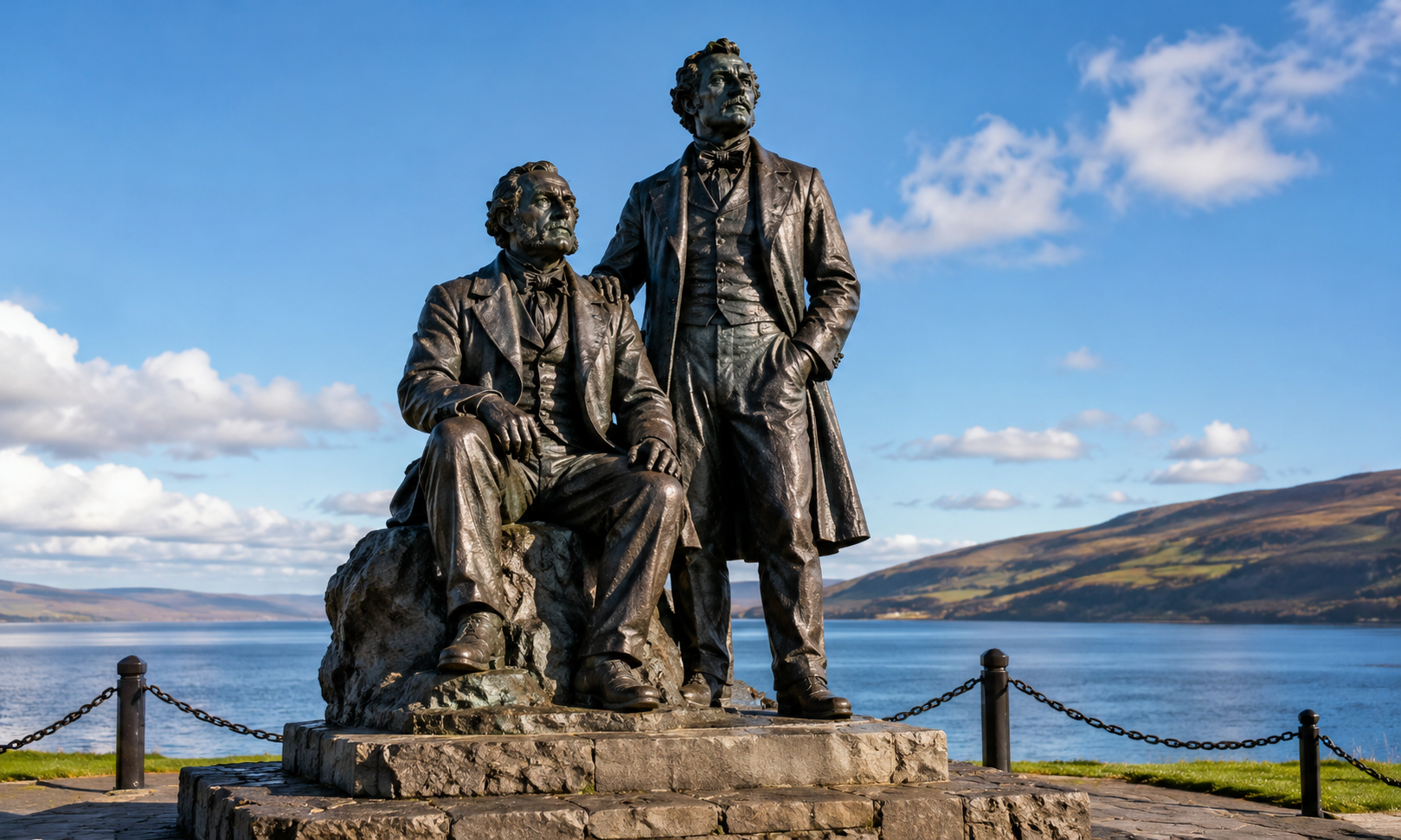
Collie and Mackenzie Statue: History, Location, and Visitor Guide
The Collie and Mackenzie Statue is one of those places on the Isle of Skye that can easily look like a quick roadside stop at first. But once you know the story behind it, the statue becomes much more meaningful. Set in Sligachan, with the dramatic Cuillin Mountains rising in the background, this bronze memorial honours two men who helped shape the early story of Scottish mountaineering on Skye.
The statue remembers Professor Norman Collie and John Mackenzie, two very different men brought together by the wild mountains of Skye. Collie was a scientist, climber, and explorer. Mackenzie was a local crofter and mountain guide from Sconser, known for his deep knowledge of the Cuillin Hills. Together, they explored routes that later became important in the climbing history of the island.
For visitors, the Collie and Mackenzie Statue is more than a landmark. It is a reminder of friendship, adventure, local knowledge, and the strong pull of the Skye landscape.
What Is the Collie and Mackenzie Statue?
The Collie and Mackenzie Statue is a bronze sculpture showing Norman Collie standing beside John Mackenzie, who is seated. The figures are placed on a rugged stone base, which suits the wild setting around Sligachan. Instead of feeling polished or formal, the statue feels connected to the land around it.
That is part of its charm. The two men are not shown as distant historical figures. They look like they belong in the landscape, facing the mountains that shaped their lives. Behind them, the Black Cuillin gives the statue a powerful natural backdrop.
Many people visit the area for the famous Sligachan Old Bridge, the mountain views, and the open scenery. But the Collie and Mackenzie memorial adds a deeper layer to the stop. It gives visitors a reason to pause and think about the people who walked, climbed, mapped, and understood these mountains long before Skye became such a popular travel destination.
Where Is the Collie and Mackenzie Statue Located?
The Collie and Mackenzie Statue location is in Sligachan, a small settlement on the Isle of Skye in Scotland. It sits close to the A87 road, near the Sligachan Hotel area, and not far from the well-known Sligachan Old Bridge.
This makes it easy to visit if you are travelling across Skye by car. Sligachan is often used as a stopping point because it sits in a scenic position between different parts of the island. From here, you get open views toward the Cuillin range, including the dark, jagged shapes of the Black Cuillin.
The statue is especially popular with people who enjoy Skye photography spots, historic places on the Isle of Skye, and quiet landmarks with a story behind them. It is not a huge attraction that takes hours to explore, but it is one of the most meaningful things to see in Sligachan.
Who Was John Mackenzie?
John Mackenzie was a local man from Sconser, on the Isle of Skye. He worked as a crofter and became known as an expert mountain guide. His knowledge of the Cuillin Mountains came from real experience, not books or maps. He understood the ridges, rocks, routes, and changing conditions of the hills in a way that only someone deeply connected to the land could.
Mackenzie played an important role in the early days of Cuillin climbing history. At a time when many visitors were still trying to understand the difficult terrain of Skye’s mountains, he helped guide climbers safely through the area. His skill and confidence made him one of the key figures in Skye mountaineering.
The seated figure in the Collie and Mackenzie Statue represents this local knowledge and quiet strength. It reminds visitors that the history of climbing on Skye was not only shaped by outside explorers. It was also shaped by people who lived there and knew the landscape intimately.
Who Was Professor Norman Collie?
Professor Norman Collie was a scientist, climber, and explorer who became closely linked with the Isle of Skye. Although he came from a very different background from John Mackenzie, he shared the same love for mountains, adventure, and discovery.
Collie became fascinated by the Cuillin Hills and returned to Skye many times. His climbs and explorations helped bring wider attention to the mountains. He was part of a period when the Black Cuillin was becoming better known among climbers, walkers, and mountaineering writers.
In the statue, Collie is shown standing, looking toward the landscape. This detail gives the sculpture a thoughtful feeling. It suggests curiosity, respect, and the pull of the mountains. For anyone interested in Norman Collie mountaineer history, the statue is a powerful reminder of his connection to Skye.
The Friendship Behind the Statue
One of the most interesting parts of the Collie and Mackenzie Statue is the friendship it represents. John Mackenzie and Professor Norman Collie came from very different worlds, but the mountains gave them common ground.
Mackenzie brought local experience, practical skill, and a lifetime of knowledge of the Skye landscape. Collie brought scientific curiosity, climbing ambition, and a desire to explore. Together, they formed a strong partnership in the Cuillin Mountains.
Their friendship lasted for many years and became an important part of Scottish mountaineering history. They climbed, explored, and helped make the Skye Cuillin better known. The statue captures that bond without needing dramatic movement or grand gestures. Two figures looking toward the mountains are enough.
This is why the memorial feels so human. It is not only about routes, records, or achievements. It is about trust, shared journeys, and respect between two people who loved the same wild place.
Why the Statue Was Built
The Collie and Mackenzie Statue was created to honour the lives and achievements of these two mountaineering pioneers. Their names are strongly connected with the early exploration of the Cuillin range, and the memorial gives visitors a visible way to remember that legacy.
The project was supported by the Collie Mackenzie Heritage Group, which worked to celebrate their contribution to Skye’s mountain culture. A bronze sculpture in Sligachan was a fitting tribute because the area is closely linked with the story of both men.
The location also matters. Placing the statue near the Cuillin Hills makes the memorial feel alive. Visitors do not have to imagine the landscape that inspired Collie and Mackenzie. It is right there in front of them.
The statue helps keep their story accessible to people who may not be climbers. Even if you are simply passing through Sligachan on a Skye road trip, the memorial gives you a small but meaningful connection to the island’s past.
When Was the Collie and Mackenzie Statue Unveiled?
The Collie and Mackenzie Statue was unveiled in September 2020 at Sligachan. The timing gave the memorial a slightly unusual beginning, as the unveiling took place during the Covid-19 period, when public gatherings were limited.
Even so, the event carried special meaning. Members of both the Collie and Mackenzie families were connected to the occasion, making the unveiling more personal than a standard public ceremony.
Today, the statue stands as a permanent part of the Sligachan landscape. For visitors, it is a peaceful stop with a strong story behind it. For Skye, it is a tribute to two men whose names remain tied to the island’s mountains.
Who Created the Collie and Mackenzie Statue?
The sculpture was created by Steve Tinney, also referred to as Stephen Tinney in some sources. The artwork is made from bronze, a material often used for public memorials because of its strength and lasting quality.
The design works well because it does not try to overpower the setting. Instead, it blends with the rough ground, open sky, and mountain views around it. The figures look calm, thoughtful, and rooted in place.
The statue’s simple arrangement is one reason it feels so memorable. Norman Collie standing and John Mackenzie seated create a natural balance. Their body language directs attention toward the Cuillin Mountains, reminding visitors that the landscape is part of the story too.
What Makes the Sligachan Setting Special?
Sligachan is one of the most scenic areas on the Isle of Skye. It is known for wide mountain views, open moorland, the River Sligachan, and the famous old bridge that appears in many travel photos.
The Collie and Mackenzie Statue fits beautifully into this setting. It stands near the mountains that shaped the lives of the two men it honours. On a clear day, the view toward the Black Cuillin is dramatic. On a misty day, the statue can feel even more atmospheric, with the mountains partly hidden by cloud.
This is what makes the site different from many other memorials. The surrounding landscape is not just a background. It is part of the meaning. The Cuillin Hills were the reason Collie and Mackenzie became connected in the first place.
For travellers searching for Isle of Skye attractions, this spot offers history and scenery in one place.
How to Visit the Collie and Mackenzie Statue
Visiting the Collie and Mackenzie Statue is straightforward if you are already travelling around Skye. The statue is in Sligachan, close to the main road, so it works well as a short stop during a wider island route.
Many visitors combine it with the Sligachan Old Bridge, which is nearby. The bridge, river, mountains, and statue together make this one of the best small stops in central Skye.
Bring a camera, especially if the weather is clear. The statue looks particularly striking with the Cuillin range behind it. But even without perfect weather, the place still has atmosphere. Skye’s changing clouds and light often make the scene feel more dramatic.
As with most places on the island, sensible footwear is useful, especially if the ground is wet. The weather on Skye can change quickly, so it is always worth having a jacket nearby.
Best Time to Visit
The Collie and Mackenzie Statue can be visited throughout the year. Spring and summer usually bring longer daylight hours, which makes it easier to enjoy the surrounding views. Autumn can be beautiful too, with softer colours across the landscape.
For photography, early morning or evening often gives the best light. The mountains can look more dramatic when the sun is lower, and the area may feel quieter than during the middle of the day.
Winter visits can also be rewarding, especially when the Cuillin Mountains have snow on the higher slopes. However, weather and road conditions should always be checked carefully during colder months.
The best experience usually comes when you are not rushing. Even though the statue is a short stop, give yourself a little time to look at the figures, read any information nearby, and take in the mountain view.
Things to See Near the Collie and Mackenzie Statue
There are several interesting places near the Collie and Mackenzie Statue, making it easy to include in an Isle of Skye itinerary.
The Sligachan Old Bridge is one of the closest and most photographed nearby landmarks. With the mountains behind it and the river below, it is a classic Skye scene.
The River Sligachan is also worth a slow look, especially if you enjoy peaceful landscape views. The water, stones, and open space around the river add to the feeling of the place.
The Sligachan Hotel area is another useful reference point for visitors. It has long been associated with climbers, walkers, and travellers exploring the island.
Further away, you can connect the visit with other popular Skye stops such as the Fairy Pools, Talisker Distillery, Portree, and other scenic areas around the Cuillin Hills. This makes the statue a natural part of a wider Skye road trip.
Is the Collie and Mackenzie Statue Worth Visiting?
Yes, the Collie and Mackenzie Statue is worth visiting, especially if you enjoy places with both beauty and meaning. It may not be one of the largest attractions on the Isle of Skye, but it has a quiet strength that stays with you.
For history lovers, it tells the story of Norman Collie, John Mackenzie, and the early days of Skye mountaineering. For walkers and climbers, it honours two people who helped shape the understanding of the Cuillin Mountains. For casual visitors, it offers a scenic and thoughtful stop near one of Skye’s most famous views.
The statue also adds context to the landscape. After seeing it, the mountains no longer feel like just a dramatic backdrop. They become part of a human story filled with friendship, skill, courage, and discovery.
Why the Statue Matters Today
The Collie and Mackenzie Statue matters because it keeps an important part of Skye’s heritage visible. The island is now known around the world for its scenery, but places like this remind visitors that the landscape also has deep local stories.
John Mackenzie represents the knowledge of people who lived close to the land. Professor Norman Collie represents the spirit of exploration that brought wider attention to the mountains. Together, they show how local experience and outside curiosity can meet in a powerful way.
The memorial also gives credit to the early history of Scottish mountain guiding. Before modern guidebooks, GPS routes, and online travel advice, people relied on skill, memory, courage, and trust. Mackenzie and Collie belonged to that older world of mountain exploration.
Standing in Sligachan, looking toward the Black Cuillin, the statue feels exactly where it should be.
Visitor Tips for a Better Stop
The Collie and Mackenzie Statue is best enjoyed as part of a relaxed visit to Sligachan. Try not to treat it only as a quick photo stop. Take a moment to look at the direction of the figures and the mountains beyond them.
Visit the Sligachan Old Bridge while you are there, as the two landmarks work well together. The bridge gives you the classic scenic view, while the statue gives you the human story behind the landscape.
Clear days are best for seeing the Cuillin Hills, but mist and cloud can make the place feel even more dramatic. That is part of the charm of the Isle of Skye. The weather changes the mood of the scene constantly.
For anyone planning a route through central Skye, this is an easy and worthwhile stop. It brings together Isle of Skye history, mountain scenery, public sculpture, and Scottish climbing heritage in one memorable place.