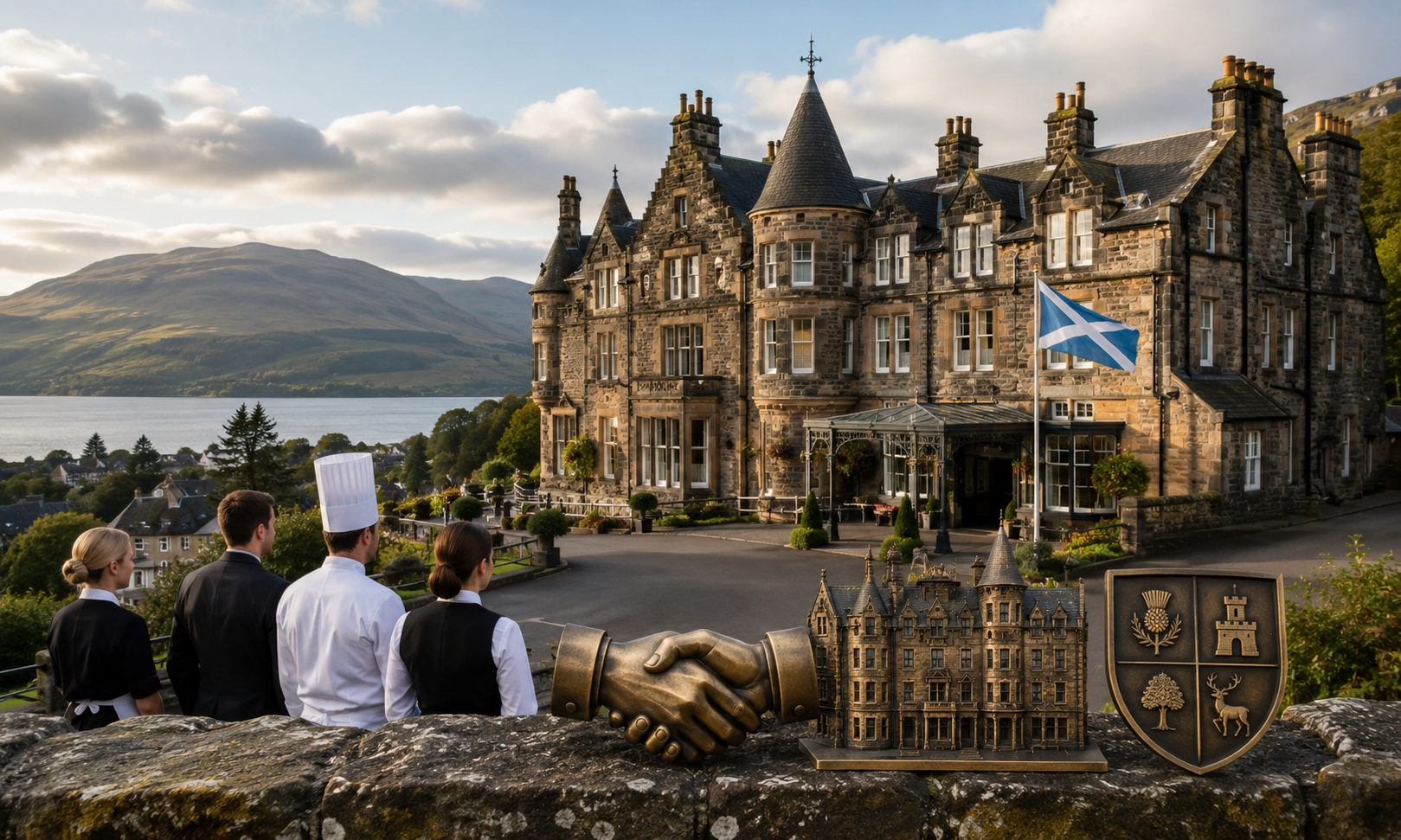
Historic Scottish Hotel Sold: What the Deal Means for Guests, Jobs and Local Heritage
When a historic Scottish hotel sold story appears in the news, people usually want more than a sale price. They want to know who bought it, why the owners decided to sell, whether the hotel will stay open, and what the deal means for guests, staff, weddings, local businesses and the building itself.
Across Scotland, these sales often involve more than bricks, bedrooms and balance sheets. A landmark Scottish hotel can be part of a village’s identity. It may have hosted generations of family holidays, wedding receptions, coach tours, local dinners, Christmas parties and weekend breaks. So when a family-run hotel sold headline appears, it can feel like the end of one chapter and the start of another.
Recent hotel deals in Scotland show the same pattern again and again. Buyers are still interested in heritage hotels, Highland hotels, boutique accommodation, country house hotels and historic buildings with strong tourism appeal. For guests and communities, the big question is simple: will the new owner protect what made the place special, or turn it into something completely different?
Why Historic Scottish Hotel Sales Get So Much Attention
A Scottish hotel sale becomes newsworthy when the property has history behind it. It might be a Victorian hotel, a former hunting lodge, a coastal inn, a railway hotel, or a well-known wedding venue that has been in the same family for decades.
That history matters because these hotels are often tied to local memories. People remember where they stayed on their first trip to the Highlands, where they had Sunday lunch, where their parents held an anniversary, or where friends got married. A historic hotel can be both a business and a community landmark.
The interest is also financial. Scotland’s hospitality market remains attractive to buyers because of strong demand for Scottish tourism, rural escapes, island holidays, luxury breaks and experience-led travel. Hotels in places such as Loch Ness, Loch Lomond, Isle of Arran, Callander, Kyle of Lochalsh, Perthshire and the North Coast 500 route can draw guests from the UK and overseas.
For investors, a historic Scottish hotel sold deal may offer three things at once: a trading business, a property asset, and a brand story that cannot easily be copied.
The End of Family Ownership
Many of the most talked-about sales involve families stepping away after years of ownership. That is why phrases such as family-run Scottish hotel, hotel sold after decades, and same family ownership often appear in these stories.
The Kinloch Hotel on the Isle of Arran is a good example. The 30-bedroom property had been owned by the Crawford family for 72 years before being acquired by Nick Dent’s Original Collection. For readers, that kind of sale is not just a business update. It is the end of a long family connection with a well-known island hotel.
The same feeling applies when a hotel has been run by owners who lived and worked inside the business for years. Guests often know the family personally. Staff may have worked there for a long time. Locals may see the hotel as part of daily village life. When new owners arrive, people naturally wonder what will stay the same.
What the Deal Means for Guests
For guests, the first concern is usually practical. If they have a room booked, a wedding planned, or a gift voucher to use, they want reassurance.
In many cases, a hotel under new ownership continues trading as normal, at least at first. Bookings may be honoured, staff may stay in place, and the hotel may keep its name while the new owner decides on future plans. But that is not always guaranteed.
Some sales lead to a temporary closure for hotel refurbishment. Others bring a full rebrand, new room layouts, updated menus, higher prices, or changes to event packages. A hotel that once felt traditional and family-run may be repositioned as a luxury boutique hotel or a high-end destination hotel.
Guests should check a few things before booking or travelling:
Is the hotel still open during renovation? Are existing guest bookings being honoured? Has the hotel changed its name? Are the restaurant, bar, spa or leisure facilities operating? Are wedding deposits, gift vouchers and event contracts still valid?
A sale does not automatically mean bad news for guests. In many cases, new investment improves tired rooms, modernises bathrooms, refreshes dining spaces and gives the hotel a stronger future. The best outcomes happen when new owners improve comfort without stripping away the character that made the place popular.
What Happens to Jobs and Staff
A historic Scottish hotel sold story often matters most to the people who work there. Hotels support chefs, housekeepers, reception teams, bar staff, gardeners, cleaners, maintenance workers, managers and seasonal staff. In rural Scotland, one hotel can be a significant local employer.
When a sale is handled well, it can protect hotel jobs and create new opportunities. A refurbishment may require builders, decorators, suppliers and designers. A relaunch can bring more guests, more restaurant covers, more events and more shifts for staff.
But there can also be uncertainty. If a hotel closes during renovation, staff may face temporary disruption. If a buyer changes the business model, some roles may change. If the sale follows financial pressure or administration, workers may already have been dealing with a difficult period.
That is why job protection is such a key part of these stories. People want to know whether the hotel will remain a working business, whether local staff will be retained, and whether the new owner plans to grow the operation.
Why Local Heritage Matters
The appeal of a heritage hotel is not only about age. It is about atmosphere. Guests often choose a historic Scottish hotel because it feels different from a modern chain property.
That might mean oak panelling, open fires, old stone walls, sea views, antique furniture, traditional bars, grand staircases, gardens, terraces, or a building with a story going back centuries. A hotel can also hold cultural value if it has hosted famous guests, served as a coaching inn, been part of railway history, or stood at the centre of village life for generations.
This is why buyers often speak carefully about protecting the building’s character. A heavy-handed renovation can damage what guests loved in the first place. A sensitive one can give the property a new future while keeping its soul intact.
The Roman Camp Hotel in Callander shows how important this balance can be. The 17th-century property, originally built in 1625 as a hunting lodge, has been acquired by Gail Thackray and is set to reopen as Thackray House after a major refurbishment. The plans include preserving historic features while creating a more polished luxury hotel experience.
That is the challenge with many historic buildings in hospitality: they need investment to survive, but too much change can make them lose their identity.
Why Buyers Want Scottish Hotels
The reason buyers keep looking at hotels for sale in Scotland is simple: location and story still sell.
A hotel near Loch Ness can appeal to tourists looking for Highland scenery. A hotel on the Isle of Arran can attract walkers, golfers and island-holiday guests. A property near the North Coast 500 benefits from one of Scotland’s best-known road-trip routes. A hotel in Callander sits close to the Trossachs, outdoor tourism and heritage travel.
For investors, these locations can be hard to replicate. You can build a new hotel, but you cannot easily create 100 years of local history, a famous view, or a building that already has a place in people’s memories.
That is why buyers often look for freehold hotel opportunities, boutique hotel businesses, Highland hospitality assets, country house hotels, and Scottish wedding venues. These properties offer both accommodation income and wider possibilities, such as events, dining, retreats, afternoon teas, spa breaks or seasonal tourism packages.
Recent Scottish Hotel Sales Show the Trend
The Whitebridge Hotel near Loch Ness is a strong example of the type of property buyers like. It is a characterful Victorian hotel built in 1899, with 12 en-suite guest rooms, a traditional Scottish bar, café, terrace and beer garden. It was sold for an undisclosed sum from an asking price of offers over £950,000.
The Lochalsh Hotel at Kyle of Lochalsh also shows the value of location. With 47 en-suite rooms, a restaurant, lounge bar and views towards the Isle of Skye, it has long appealed to visitors exploring the west coast and the North Coast 500. Its sale after decades of family ownership underlines how established Highland hotels remain attractive to new operators.
The Kinloch Hotel on Arran adds another layer to the trend. Its sale after 72 years in the Crawford family highlights the emotional side of these deals. Guests may welcome fresh investment, but they also feel the change when a long-standing family name steps away.
Then there is The Caledonian in Edinburgh, one of Scotland’s best-known grand hotels. Its past sale to Twenty14 Holdings, connected with Lulu Group chairman M.A. Yusuffali, showed how major international investors also value iconic Scottish hotels with heritage, scale and prestige.
What New Owners Usually Change
When a hotel sold in Scotland story turns into a relaunch, the changes often start with the basics. Bedrooms may be updated. Bathrooms may be modernised. Public areas may be refreshed. Restaurants may get new menus. Wedding spaces may be improved. Gardens, terraces and bars may be made more attractive for guests and locals.
In some cases, the new owner keeps the name. In others, the hotel is rebranded to signal a fresh start. A rebrand can help attract new guests, but it can also worry loyal visitors who feel attached to the old identity.
The best new owners tend to understand that heritage is part of the product. People are not only paying for a bed. They are paying for the feeling of staying somewhere with character, history and a strong sense of place.
A successful refurbishment should make the hotel more comfortable without making it feel generic.
How a Hotel Sale Affects the Local Economy
A landmark Scottish hotel can support more than its own staff. It can bring trade to local taxis, florists, bakers, butchers, breweries, tour guides, laundry services, tradespeople, wedding suppliers and nearby attractions.
When a hotel closes, the impact spreads. Fewer guests may mean fewer restaurant bookings nearby. Fewer weddings may affect photographers, entertainers and decorators. Fewer overnight visitors may reduce spending in shops and cafés.
When a hotel is rescued, sold, refurbished or reopened, the benefits can also spread. A busy hotel brings people into the area, gives visitors a reason to stay longer, and keeps money circulating locally.
This is why a historic Scottish hotel sold deal can be important for the wider visitor economy, not just the buyer and seller.
What Guests Should Watch Before Booking
Anyone planning to stay at a recently sold hotel should look beyond the headline. A sale can be positive, but it is worth checking the current situation before making plans.
Look for recent updates from the hotel itself. Check whether the name has changed. Confirm whether facilities are open. Ask directly about restaurant hours, wedding bookings, spa access, parking, pet policies and renovation work.
For weddings and events, it is especially important to get written confirmation. A hotel changing ownership may still honour existing agreements, but guests should not rely on old information from booking sites or social media pages.
If the hotel is being refurbished, ask whether work will affect noise, access, views, room availability or dining options. A beautiful historic hotel can still offer a great stay during a transition, but clear information makes the experience much smoother.
How Much Did the Nuremore Hotel Sell For?
The Nuremore Hotel and Country Club in Carrickmacross, Co Monaghan, was sold to a consortium led by the McGettigan family, but the final sale price was not publicly confirmed in the main reports. The property had been offered for sale with a guide price of around €6 million.
That figure is useful because people often search for the sale price, but it should not be treated as the confirmed final amount unless a disclosed completion price is published. Reports also noted that the hotel had previously been sold in 2020 for around €8 million before later closing.
How Much Did Brunswick Hotel Sell For?
This question depends on which Brunswick Hotel people mean.
Hotel Brunswick in Brunswick Heads, New South Wales, was reported as a A$68 million deal. The Brunswick Hotel in New Farm, Brisbane, was reported as selling for A$12.8 million in an off-market freehold deal.
Because both names appear in hotel-sale searches, it is easy for readers to mix them up. The location matters.
Which Businessman Acquired This Iconic Scottish Hotel?
The iconic Scottish hotel often linked with this question is The Caledonian in Edinburgh. Businessman M.A. Yusuffali, chairman of Lulu Group, was behind the acquisition through Twenty14 Holdings, the group’s hospitality investment arm.
The deal drew attention because The Caledonian is one of Edinburgh’s best-known luxury hotels and a major Scottish hospitality asset with more than a century of history.
When Did the Musser Family Sell the Grand Hotel?
The Musser family agreed to sell the Grand Hotel on Mackinac Island to KSL Capital Partners in September 2019. The family’s connection with the hotel had lasted more than 85 years, which is why the sale attracted so much attention.
The deal is not a Scottish hotel sale, but it appears in related searches because it follows the same theme: a famous historic hotel sold after generations of family ownership.