Dr Robert McIntyre and the Story of Scotland’s First SNP MP
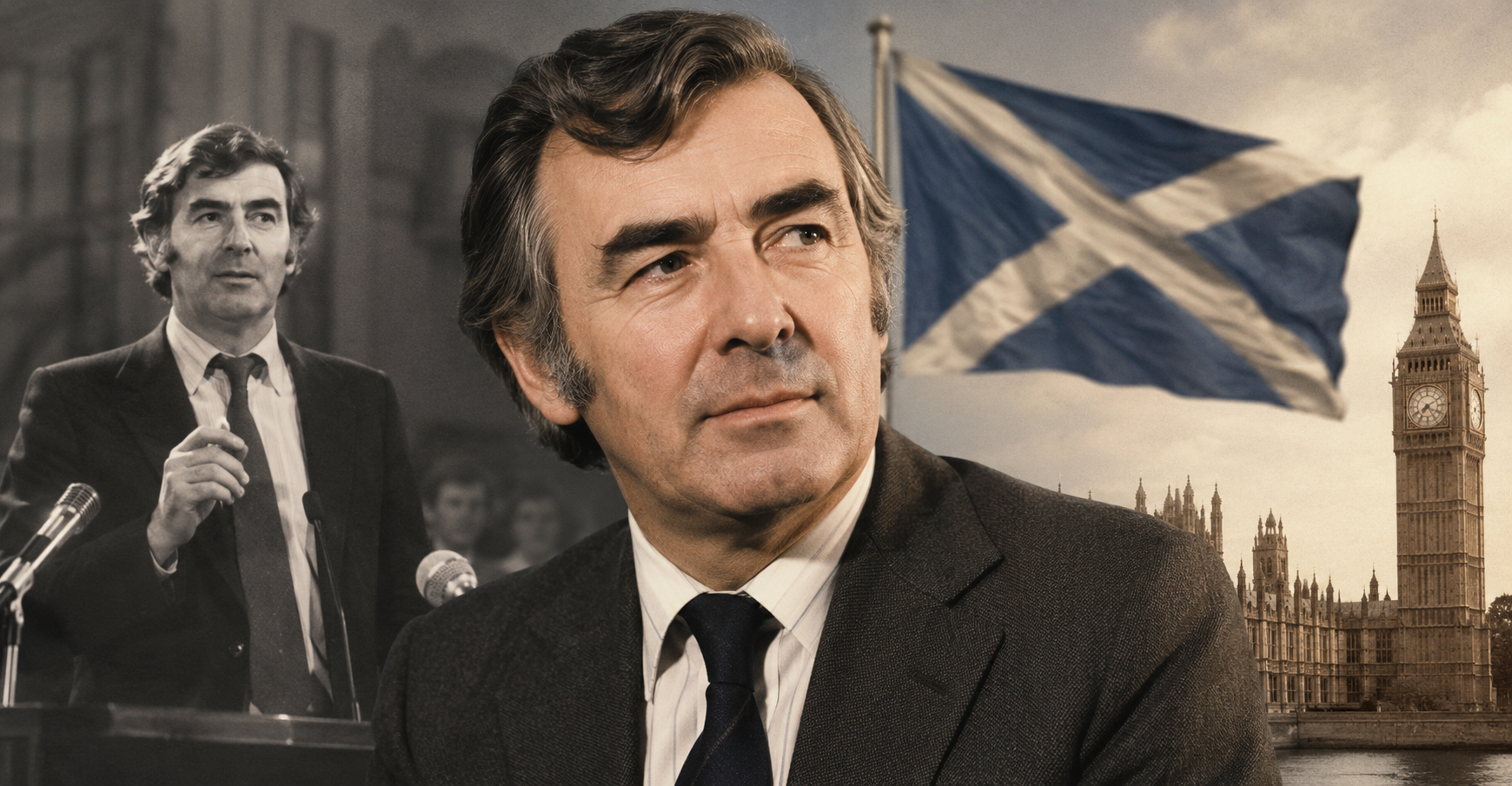
Dr Robert McIntyre is one of the names that belongs near the beginning of the modern Scottish National Party story. Long before the SNP became a major force in Scottish politics, he was arguing for Scottish self-government, building the party through lean years, and proving that a Scottish nationalist could win a seat at Westminster.
He was a doctor by profession, a nationalist by conviction, and a political organiser at a time when the SNP was still far from mainstream. His 1945 by-election victory in Motherwell made him the party’s first ever Member of Parliament, a breakthrough that later generations of nationalists would look back on as a turning point. The National Library of Scotland identifies him as SNP MP for Motherwell and Wishaw in 1945, Chairman of the SNP from 1948 to 1956, and President from 1958 to 1980.
For readers searching for Dr Robert McIntyre, the important thing to understand is this: his time in Parliament was short, but his influence lasted for decades.
A doctor before he was a political figure
Robert Douglas McIntyre was born in 1913 and trained as a physician. His medical background mattered because it shaped the way many people saw him. He was not only a party activist or campaigner. He was also Dr McIntyre, a public-minded professional who understood ordinary communities through his work in health.
The National Library of Scotland describes him as Dr Robert Douglas McIntyre MB, ChB, DPH, DUniv, JP, a physician and leader of the Scottish National Party. His medical career included work as a consultant chest physician in Stirling and Clackmannan from 1951 to 1979, according to the library’s archival inventory.
That part of his life is easy to overlook because the political headline is so strong. But it helps explain why he earned the affectionate nickname Doc Mac. He was seen as a doctor, campaigner, councillor, and nationalist all at once.
The road from medicine to Scottish nationalism
Dr Robert McIntyre came of age politically during a period when the idea of Scottish independence was still treated as marginal by much of the British political establishment. The SNP had been founded in the 1930s, but it did not yet have the electoral strength it would later develop.
McIntyre joined the Scottish National Party in the early 1940s and became one of its leading organisers during a difficult period. At that time, Scottish nationalism had to fight for attention against the dominant parties, wartime politics, and scepticism from voters who were unsure whether independence was practical.
His importance was not only that he believed in Scottish self-government. It was that he helped keep the party organised when there were few obvious rewards. He was part of the generation that kept the nationalist argument alive before it became a regular part of Scottish political debate.
The 1945 Motherwell by-election
The moment that made Dr Robert McIntyre famous came in April 1945, near the end of the Second World War. He won the Motherwell by-election and became the first SNP candidate elected to the House of Commons. The Guardian archive describes the result as the moment when the SNP won its first seat at Westminster, with McIntyre becoming the first Scottish Nationalist MP after winning the Motherwell and Wishaw by-election.
This victory mattered because it showed that Scottish nationalism could move from speeches and meetings into electoral success. It gave the SNP a place in Parliament, even if only briefly, and proved that the party could not simply be dismissed as a small pressure group.
The win was narrow, but the symbolism was huge. For the first time, the SNP had an MP. For a party still trying to define itself in public life, that was a historic breakthrough.
A short stay at Westminster with a lasting meaning
McIntyre’s time in Parliament did not last long. He held the seat only until the 1945 general election, when he lost it to Labour. The Independent obituary noted that he won Motherwell in April 1945 and held it until the general election that July, describing those three months as a short but memorable period at Westminster.
That short spell is one reason his story is so interesting. By normal political measures, a three-month parliamentary career might seem minor. But in the history of the SNP, it mattered far more than the length of time suggests.
He gave the party its first real parliamentary milestone. Later SNP MPs would arrive in larger numbers, but Dr Robert McIntyre was the first to cross that line.
Why his victory was difficult for the political establishment
McIntyre’s arrival at Westminster also exposed how unusual his position was. He was the only SNP MP, and he was entering a Parliament built around established party loyalties.
The problem of sponsorship when taking his seat became part of his political story. The custom required sponsors from existing MPs, but McIntyre did not want to appear dependent on the established parties. This episode became symbolic of his wider position: he was trying to represent Scotland through a party that did not fit neatly into the Westminster system of the time.
That tension would remain part of the nationalist story for many years. The SNP wanted to be heard inside a political structure it also challenged. McIntyre’s brief parliamentary experience captured that contradiction early.
Leading the SNP through hard years
After losing his seat, Dr Robert McIntyre did not disappear from politics. In many ways, his most important work came afterward.
The National Library of Scotland records him as Chairman of the SNP from 1948 to 1956 and President from 1958 to 1980. Those years were not easy for the party. The SNP was still small, often short of money, and far from the electoral breakthroughs it would achieve later.
McIntyre’s role was to help hold the party together, keep the independence argument alive, and mentor newer activists. The Independent described him as regarded as the “father of the SNP” and as a friend and mentor to party members and leaders over the following 50 years.
That kind of influence is not always visible in election results. It shows in continuity, organisation, and the survival of a political idea through years when success looked distant.
The local government chapter in Stirling
Another important part of McIntyre’s career was his service in Stirling. He became involved in local government and eventually served as Provost of Stirling from 1967 to 1975. The Stirling Council Archives describe Robert Douglas McIntyre as a Scottish physician, SNP politician, and MP, and note his leadership and presidential roles in the party.
His time in local government matters because it shows a different side of his public life. He was not only interested in national questions or constitutional debate. He also served at civic level, dealing with local responsibilities and public duties.
For a politician who believed in Scottish self-government, local service gave him another way to show commitment to community life.
The meaning of Doc Mac
The nickname Doc Mac captures why Dr Robert McIntyre remained such a memorable figure. It was informal, personal, and affectionate. It suggested someone who was known not only for speeches, but for presence, advice, and loyalty.
Politics often remembers leaders through offices and dates. McIntyre’s story also includes something softer: the role of a mentor. He belonged to the generation that kept a movement alive before it had mass support.
That is why many later nationalists looked back at him with respect. He had been there when the cause was difficult, not only when it was popular.
His place in the wider SNP story
To understand Dr Robert McIntyre, it helps to place him in the long timeline of the Scottish National Party.
He came before the major SNP breakthroughs of the late 1960s, before devolution, before the Scottish Parliament, and before the party became a regular party of government in Scotland. His work belonged to the earlier period, when Scottish nationalism was still building its foundations.
His 1945 victory did not immediately transform British politics. It did something more patient. It gave the party a first parliamentary foothold and a story to build around.
Every political movement needs moments like that. They become proof that what seems impossible can happen once.
Why Dr Robert McIntyre still matters
Dr Robert McIntyre still matters because he represents the long road of Scottish nationalism. His career reminds readers that political change rarely arrives suddenly. It is usually built by people who work for years before the wider public is ready to listen.
He was not the most powerful politician of his age, but he was a pioneer. He gave the SNP its first seat at Westminster, led the party during difficult years, served as president for more than two decades, and remained connected to civic life through Stirling.
The National Library of Scotland preserves his personal and political papers, including material relating to the Scottish National Party and other organisations, showing how deeply his life was tied to the party’s early development.
A legacy built on persistence
The story of Dr Robert McIntyre is not only about one by-election. It is about persistence. He lost elections, returned to medicine, continued organising, served the party, worked in local government, and stayed committed to the idea of Scottish self-government long after his brief time in Parliament.
For anyone trying to understand the history of the SNP, his name is unavoidable. He was the first SNP MP, but he was also more than that. He was a physician, organiser, party leader, civic figure, and one of the people who helped carry Scottish nationalism from the margins toward the centre of public debate.