BA285 Fuel Dump Scotland What Happened to the British Airways Flight
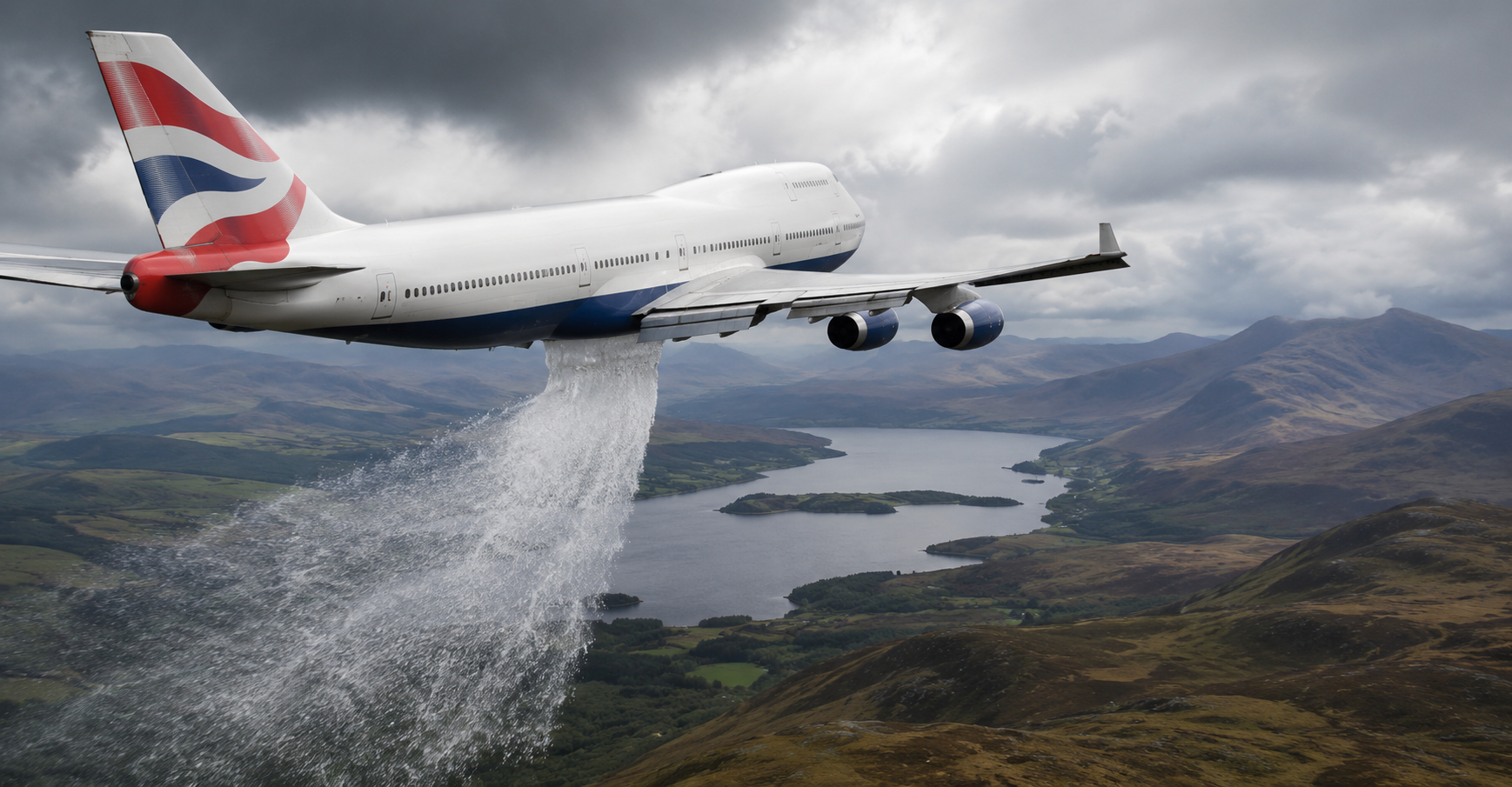
The BA285 fuel dump Scotland incident caught attention because it involved a huge British Airways Airbus A380, a long-haul route from London Heathrow to San Francisco, and a mid-flight turnback after a reported technical issue.
For passengers, it meant a long delay and a disrupted journey. For aviation watchers, it became a highly tracked flight as the aircraft held near the Hebrides, dumped fuel, and returned safely to Heathrow. For everyone else, it raised a simple question: why would a plane dump fuel in the first place?
Reports said British Airways flight BA285 departed London Heathrow for San Francisco on December 10, 2025, before entering a holding pattern west of the Scottish islands for around an hour. The airline later confirmed the aircraft had returned because of a technical issue, and the flight landed safely with passengers disembarking normally.
The flight at the centre of the story
BA285 is a regular British Airways long-haul service between London Heathrow Airport and San Francisco International Airport. It is a major transatlantic route, often flown by large wide-body aircraft because of the distance and passenger demand.
On this occasion, the aircraft involved was reported as an Airbus A380, one of the largest passenger aircraft in commercial service. A flight like London Heathrow to San Francisco carries a heavy fuel load because it has to cross the Atlantic, continue across North America, and still carry legal reserves.
That heavy fuel load is normal for takeoff. The issue comes when a long-haul aircraft needs to land much earlier than planned.
What happened after takeoff?
The flight left Heathrow for the scheduled long journey to San Francisco, but it did not continue across the Atlantic. Instead, tracking data showed the aircraft holding east of the Oceanic control area, near the Hebrides, for about an hour. Flightradar24 also posted that British Airways BA285 was holding east of the oceanic airspace while operating the Heathrow to San Francisco route.
The aircraft then returned to London Heathrow. British Airways said the flight landed safely, customers disembarked normally, and the airline apologised for the delay while teams worked to get passengers’ journeys back on track.
Why did BA285 dump fuel?
The likely reason was weight. Long-haul aircraft take off much heavier than they normally land. That is because they carry enough fuel for the journey, reserves, alternate planning, and operational safety.
When a flight has to return much earlier than expected, it may still be above its maximum landing weight. Landing too heavy can put extra stress on the aircraft structure, brakes, tyres, and landing gear.
Fuel dumping, also called fuel jettison, is a controlled procedure used to reduce aircraft weight before an early landing or diversion. Aviation safety guidance explains that fuel dumping can be used to reduce an aircraft below maximum landing weight when it is forced to return or divert earlier than expected.
Was this an emergency?
The reports described a technical issue rather than giving full detail about the fault. That is common in aviation reporting. Airlines often confirm the broad reason but do not immediately release technical specifics unless there is an investigation or public safety reason.
What matters most is that the aircraft returned safely. A technical issue does not always mean passengers were in immediate danger. Pilots are trained to follow procedures, coordinate with air traffic control, reduce risk, and choose the safest option.
In this case, the safest option appears to have been to stop the Atlantic crossing, reduce weight, and return to Heathrow, where British Airways has maintenance, operations teams, replacement aircraft options, and passenger support.
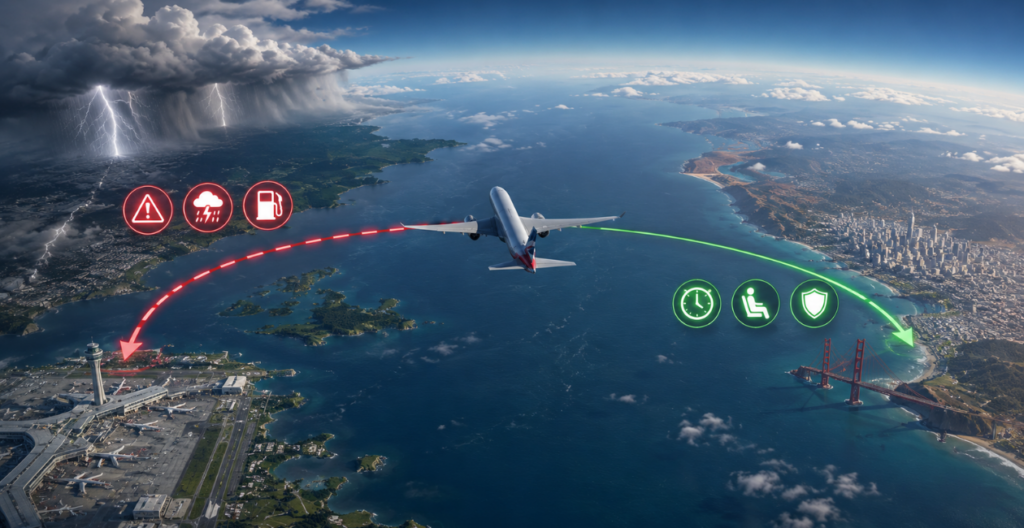
Why return to Heathrow instead of continuing to San Francisco?
For a flight heading from London to San Francisco, the route crosses oceanic airspace. Once a long-haul aircraft commits to the North Atlantic portion, diversion options become more complex.
If a technical issue appears before entering the oceanic crossing, pilots may decide it is safer to return to the departure airport. Heathrow would make sense because it is the airline’s main base, has engineering support, and can handle an Airbus A380.
The holding pattern near Scotland allowed the crew to manage fuel and prepare for a safe return. From a passenger point of view, turning back can feel frustrating. From a flight safety point of view, it can be the most cautious decision.
How fuel dumping works
Fuel dumping is not random. It is a controlled system fitted to certain large aircraft. Fuel is released through specific outlets so the aircraft can reduce weight faster than it would by simply flying around and burning fuel.
Not every aircraft can dump fuel. Many smaller aircraft are designed to land overweight if needed or burn fuel before landing. Large long-haul jets are more likely to have fuel jettison systems because the difference between maximum takeoff weight and maximum landing weight can be significant.
Safety guidance says fuel jettison systems must be able to reduce aircraft weight at a required average rate, and the process is part of aircraft certification standards for suitable aircraft.
Is fuel dumping dangerous for people on the ground?
Fuel dumping is usually carried out under procedures designed to reduce risk. When possible, pilots and air traffic controllers choose areas and altitudes where fuel can disperse before reaching the ground.
In the BA285 case, reports placed the holding and fuel dump near the Hebrides, off the coast of Scotland, rather than over a dense city area. That detail matters because fuel jettison over open or remote areas reduces the chance of ground impact.
Fuel dumping is still not something airlines do casually. It is used when the safety benefit of reducing aircraft weight outweighs the drawbacks of releasing fuel.
Why aviation fans tracked BA285
The BA285 incident became interesting to flight-tracking users because the aircraft was a large A380, it was operating a high-profile transatlantic route, and its holding pattern near Scotland was visible on tracking platforms.
The Scottish Sun reported that the flight became one of the most tracked flights worldwide on Flightradar24 during the incident.
That kind of attention is common now. When a long-haul aircraft circles, turns back, or squawks an unusual pattern, aviation enthusiasts often spot it quickly online. Flight tracking can make a routine safety decision look dramatic, even when crews are calmly following procedures.
What passengers experienced
For passengers on board, the incident likely meant uncertainty, delay, and a long day. A flight to San Francisco already takes many hours, so returning to London Heathrow after departure can be exhausting.
The important part is that passengers disembarked normally after the safe landing. British Airways said it apologised and that teams were working to get customers’ journeys back on track.
In these situations, passengers may be rebooked, placed on later flights, offered support depending on the delay, or given further instructions by airline staff. The exact support can depend on airline policy, ticket type, availability, and passenger rights rules.
The difference between dumping fuel and burning fuel
A plane can reduce weight in two ways: it can burn fuel by staying airborne, or it can dump fuel if the aircraft is equipped and the situation calls for it.
Burning fuel takes longer. That may work if the issue is minor and there is no urgency. Fuel dumping reduces weight more quickly, which can be helpful when a crew wants to land sooner but still reduce stress on the aircraft.
In the BA285 case, the aircraft reportedly held for about an hour near the Hebrides before returning. That suggests the crew used time, fuel management, and flight planning to prepare for a safe landing.
Why maximum landing weight matters
Aircraft have certified weight limits. Maximum takeoff weight is usually higher than maximum landing weight because takeoff happens with more fuel on board. Over the course of a normal long-haul flight, fuel burns off and the aircraft becomes lighter before landing.
If a flight turns back soon after departure, it may not have burned enough fuel. That is when crews must consider whether to land overweight, burn fuel, or dump fuel.
Aviation safety guidance notes that maximum landing weight is normally an operational limitation, though an overweight landing can be made if safety requires it.
What the BA285 fuel dump tells us about aviation safety
The incident may have looked dramatic online, but it also shows how modern aviation is built around caution. Pilots do not need to continue a long oceanic flight if something does not feel right technically. They can hold, coordinate, reduce weight, and return to a major airport.
That is what appears to have happened with BA285. The aircraft did not continue toward San Francisco. It stayed within reach of the UK, managed the situation, and landed safely at Heathrow.
For passengers, the result was disruption. For safety, the result was exactly what matters most: the aircraft returned safely and everyone got off normally.
Key details from the incident
British Airways flight BA285 was operating from London Heathrow to San Francisco.
The aircraft was reported as an Airbus A380.
The flight held near the Hebrides off the coast of Scotland.
It reportedly dumped fuel before returning to Heathrow.
British Airways confirmed a technical issue and said the aircraft landed safely.
Passengers disembarked normally after the return to London.
Why the Scotland location mattered
The phrase BA285 fuel dump Scotland became the main search term because the aircraft’s holding pattern was seen near the Hebrides, off Scotland’s west coast. That area is close to the point where many transatlantic flights prepare to enter oceanic airspace.
For a London to San Francisco flight, this was an important decision point. Continuing across the Atlantic with a technical issue could have made diversion planning more complicated. Holding near Scotland gave the crew time to manage fuel and return while still close to UK airports and airline support.
What travellers can learn from the BA285 incident
The main lesson is that a turnback does not automatically mean a near-disaster. Flights can return for many reasons, including technical faults, medical issues, passenger problems, weather, or operational concerns.
Fuel dumping can sound alarming, but it is a known procedure for large aircraft that need to land earlier than expected. It is used to help bring the aircraft closer to a safer landing weight when time or circumstances make simple fuel burn less practical.
For passengers, the experience can be frustrating. For flight crews, it is part of the job: manage the aircraft, protect safety, communicate with controllers, and land where the support is best.
The bigger picture around BA285
The BA285 fuel dump Scotland story gained attention because it combined several elements people notice: a huge British Airways A380, a long-haul flight to San Francisco, a holding pattern near Scotland, visible fuel dumping, and a safe return to London Heathrow.
It was a disruption, but it was also an example of aviation systems working as intended. The flight did not press on across the Atlantic. The crew took the safer option, reduced weight, returned to a major airport, and passengers left the aircraft normally.