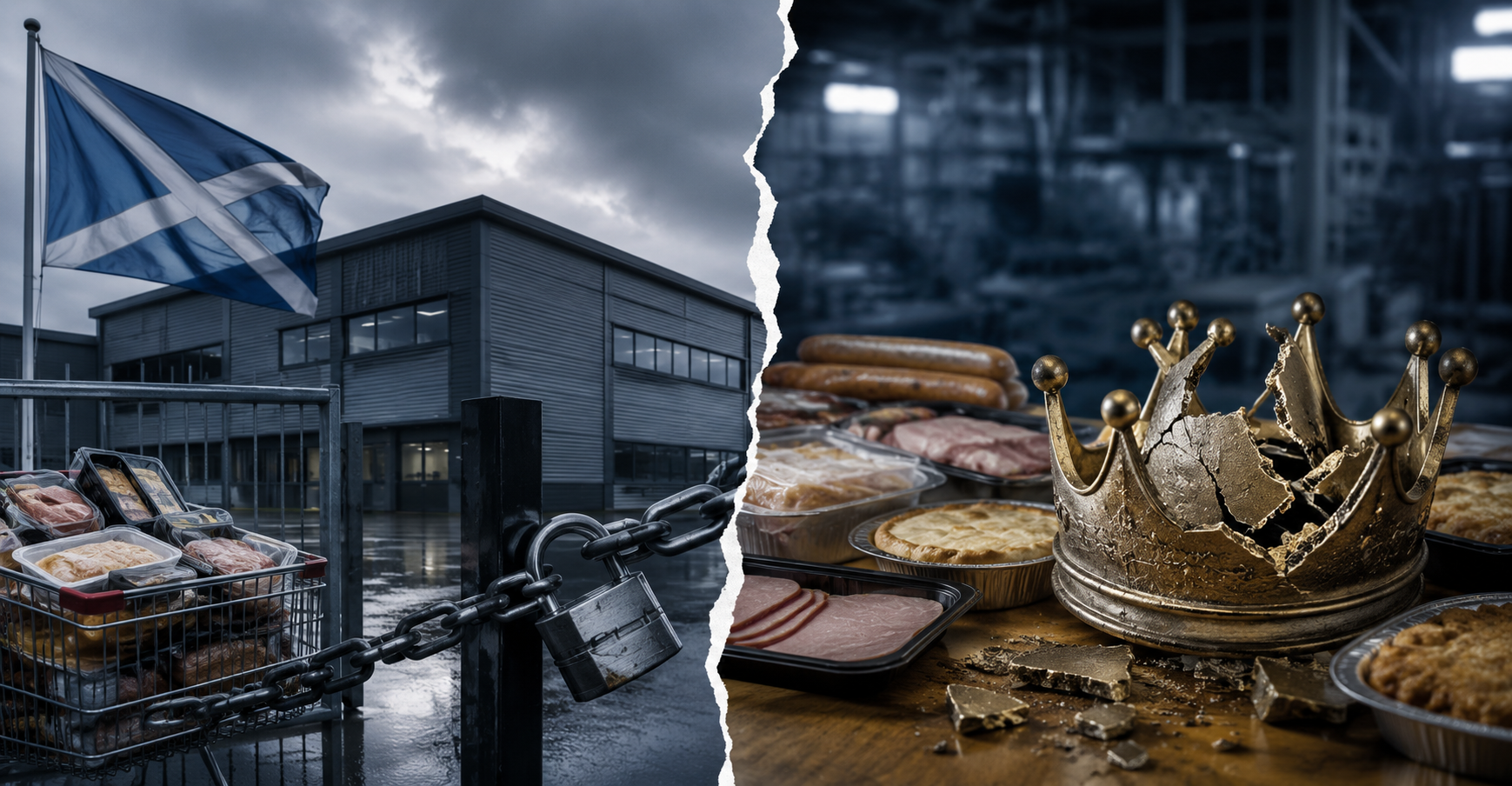
Scottish Food Firm Administration and What Happened to King Foods
The latest Scottish food firm administration story has put King Foods back in the headlines for all the wrong reasons. The Aberdeen-based food supplier, officially known as Foodstore Ltd, entered administration after years of difficult trading, rising costs, and pressure across the hospitality and catering market.
For many people, this may sound like another business collapse. But behind the headline are 41 staff redundancies, unpaid creditors, local suppliers, hotel and catering customers, and a wider warning about the pressure facing Scotland’s food distribution sector.
King Foods was not a new company trying to find its feet. It had traded for decades, supplied food across the North East of Scotland, and served customers in Stirling and Edinburgh. Its collapse shows how even established suppliers can struggle when margins tighten, competition rises, and cash flow becomes harder to manage.
The business behind the King Foods name
Foodstore Ltd, trading as King Foods, was a food wholesaler based in Aberdeen. The company supplied frozen foods, fresh fish products, dry goods, and fresh and frozen meat to hotels, retail catering outlets, and hospitality businesses across parts of Scotland.
That kind of company often works behind the scenes. Diners may never know its name, but restaurants, hotels, cafes, and catering operators depend on firms like King Foods to keep kitchens stocked and menus running.
Regional reporting says King Foods was founded in 1994, which means it had been part of the Scottish food supply sector for more than 30 years before administration.
The company’s role was practical and important. It connected food producers, seafood suppliers, meat suppliers, frozen food networks, transport services, and hospitality customers. When a business like that fails, the impact can move through more than one part of the supply chain.
What happened to King Foods?
The company had faced adverse trading for several years. According to Interpath, the problems included increased competition, cost price inflation, and wider challenges in the hospitality and catering sectors. Trading stopped in mid-February 2026, and administrators were appointed on 5 March 2026.
The appointed joint administrators were Geoff Jacobs and Alistair McAlinden of Interpath Advisory. Once they reviewed the position, they said there was no prospect of trade resuming. As a result, all 41 members of staff were made redundant.
That detail is important. In some administration cases, parts of a business can be sold or trading can continue while buyers are sought. In the case of King Foods, the business had already stopped trading, so the process moved quickly toward redundancies and asset sales.

Why the administration matters
The King Foods administration matters because it is not only a company story. It is a jobs story, a creditor story, and a supply chain story.
The business supplied food to hotels and catering outlets across the North East of Scotland, Stirling, and Edinburgh. If those customers relied on King Foods for regular deliveries, they would have needed to find replacement suppliers quickly.
For staff, the collapse meant sudden redundancy. For suppliers, it created uncertainty about unpaid invoices. For creditors, it raised the question of how much money could be recovered from the company’s remaining assets.
The case also shows how vulnerable food wholesalers can be. A company may have long-standing customers and regular trade, but still struggle if costs rise faster than income.
The debt picture
Reports after the collapse suggested that the debts were significant. The Press and Journal reported that more than £1 million was owed to banks and more than £1 million to suppliers after King Foods entered administration.
The Scottish Sun also reported debts exceeding £2 million, along with trading losses in 2024 and 2025. Its report said administrators were looking at the sale of properties and physical assets, while also warning that unsecured creditors were unlikely to receive a dividend based on current estimates.
That is the part many smaller suppliers worry about most. When a company collapses owing money, secured creditors usually stand ahead of unsecured creditors. Trade suppliers, smaller businesses, and service providers can be left waiting, sometimes with little chance of full repayment.
What pushed the company into trouble?
There does not appear to be one single cause behind the collapse. The available reports point to several pressures building over time.
Cost price inflation made goods more expensive. Increased competition made it harder to protect margins. The wider hospitality and catering sector was also under pressure, which likely affected demand, pricing, and payment cycles.
Food wholesalers often operate on tight margins. They need to buy stock, store chilled and frozen products, run vehicles, pay staff, manage credit, and keep deliveries moving. If fuel, energy, labour, ingredients, insurance, and storage costs rise, the whole model becomes harder.
At the same time, customers in hospitality may be trying to reduce costs themselves. Hotels and caterers can push for better prices, order less, delay spending, or switch suppliers. That leaves food distributors caught between expensive supply and price-sensitive demand.
Why cash flow is so important in food distribution
A business like King Foods does not only need sales. It needs cash moving at the right time.
Food wholesalers often pay suppliers before they are paid by customers. They may also have to fund stock, cold storage, delivery vehicles, fuel, wages, and maintenance before cash comes back into the business. If customers pay late or sales fall, the pressure can build quickly.
That is why reports mentioning cash flow pressure are important. A company can look active and busy from the outside, but still be under strain if too much money is tied up in stock, debtors, and operating costs.
In food distribution, small changes can matter. A few lost contracts, rising fuel bills, higher product costs, or slower customer payments can turn a thin profit into a loss.
What happens to King Foods assets?
Interpath said it would begin marketing the company’s business and assets, including a fitted cold storage facility in Aberdeen, the vehicle fleet, and other properties.
These assets are important because food distribution depends on infrastructure. Cold storage is expensive and specialist. Vehicles are needed to move chilled and frozen goods. Properties may hold value for creditors.
Selling those assets may help recover some money, but it does not guarantee creditors will be paid in full. The final result depends on the sale values, secured debts, administration costs, and the order in which claims are handled.
What administration means in this case
Administration is a formal insolvency process. Administrators take control of the company and look for the best outcome available for creditors. Sometimes that means rescuing the business. Sometimes it means selling parts of it. Sometimes it means winding down the company because trading cannot continue.
For King Foods, trading had already stopped before administrators were appointed. With no prospect of restarting the business, the focus moved to staff support, creditor communication, and asset realisation.
That is why the story feels closer to a closure than a turnaround. The name King Foods may still appear in administration records, but the trading operation itself had ended.
The human cost of the collapse
The loss of 41 jobs is one of the most serious parts of the story. These were not just numbers in an insolvency notice. They were workers connected to warehousing, administration, sales, logistics, and food supply operations.
Interpath said supporting the employees affected by redundancy was a priority. In practical terms, affected staff may need guidance on redundancy claims, unpaid wages, holiday pay, notice pay, and future employment options.
For a regional employer, a collapse like this can also affect families and local spending. When a long-running business closes, the impact can be felt beyond the company’s own building.
What it means for customers
Hotels, caterers, restaurants, and retail catering outlets that used King Foods would need to arrange alternative supply. That may sound simple, but switching food suppliers can create real disruption.
Customers may need to replace fresh fish deliveries, frozen products, meat supply, dry goods, and other regular orders. They may also have to renegotiate prices, delivery schedules, credit terms, and product availability.
For hospitality businesses already dealing with cost pressure, losing a regular supplier can create short-term stress. It can also mean higher prices if replacement suppliers cannot match previous terms.
What it means for suppliers and creditors
The creditor side of the story is just as important. Suppliers who sold goods or services to King Foods may now be waiting to learn whether they will receive any money through the administration process.
Creditors may include banks, seafood suppliers, meat suppliers, packaging companies, logistics providers, local authorities, service providers, landlords, utility firms, and professional advisers.
The reported debt figures suggest a difficult recovery picture. When debts exceed available assets, unsecured creditors often face the highest risk.
For smaller suppliers, even one unpaid account can create cash flow issues. That is how a single company collapse can ripple through a wider business network.
Why Scotland’s food supply chain is under pressure
The King Foods collapse fits into a broader pattern of pressure across the food and drink supply chain. Rising costs are not limited to one company. Energy, transport, wages, packaging, storage, finance, and product costs have affected many businesses in the sector.
Food distribution is especially exposed because it relies on constant movement. Goods must be bought, stored, chilled, transported, and delivered on time. If any part becomes more expensive, the company either absorbs the cost or passes it on to customers.
The problem is that customers may already be under pressure too. Hotels, restaurants, and caterers face their own rising costs, which makes them cautious about accepting higher supplier prices.
That is the difficult middle ground where many wholesalers operate.
Why established firms can still fail
One of the biggest lessons from the Scottish food firm administration involving King Foods is that age does not make a business safe. A company can trade for decades and still become vulnerable if market conditions turn against it.
A long history may bring customer relationships and local trust, but it does not remove the need for strong cash flow, manageable debt, and healthy margins. If costs keep rising and losses continue, even an established supplier can run out of options.
That is why administrators often encourage struggling business owners to seek advice early. The earlier financial problems are addressed, the more options there may be.
The wider business lesson
The collapse of King Foods is a warning for food suppliers, hospitality businesses, and creditors. It shows why businesses need to watch margins carefully, understand customer payment risk, and act quickly when cash flow tightens.
For suppliers, it is also a reminder to monitor credit exposure. If one customer owes a large amount, that debt can become dangerous if the customer fails.
For hospitality customers, it shows the importance of having reliable backup suppliers. A supply chain can look stable until one key link breaks.
What readers should take from the King Foods case
The King Foods administration was caused by a mix of trading losses, rising costs, competition, hospitality-sector pressure, and cash flow challenges. The result was severe: 41 jobs lost, trading stopped, administrators appointed, assets put up for sale, and creditors facing uncertainty.
The story is also a reminder that food wholesalers play an important role even when consumers do not know their names. They connect producers, kitchens, hotels, and caterers. When one collapses, the impact can reach workers, suppliers, customers, and the wider regional economy.
For Scotland’s food distribution sector, the case of King Foods shows how thin the line can be between long-running trade and financial distress. Rising costs, weak margins, and cash flow pressure can turn a familiar local supplier into the latest administration headline.