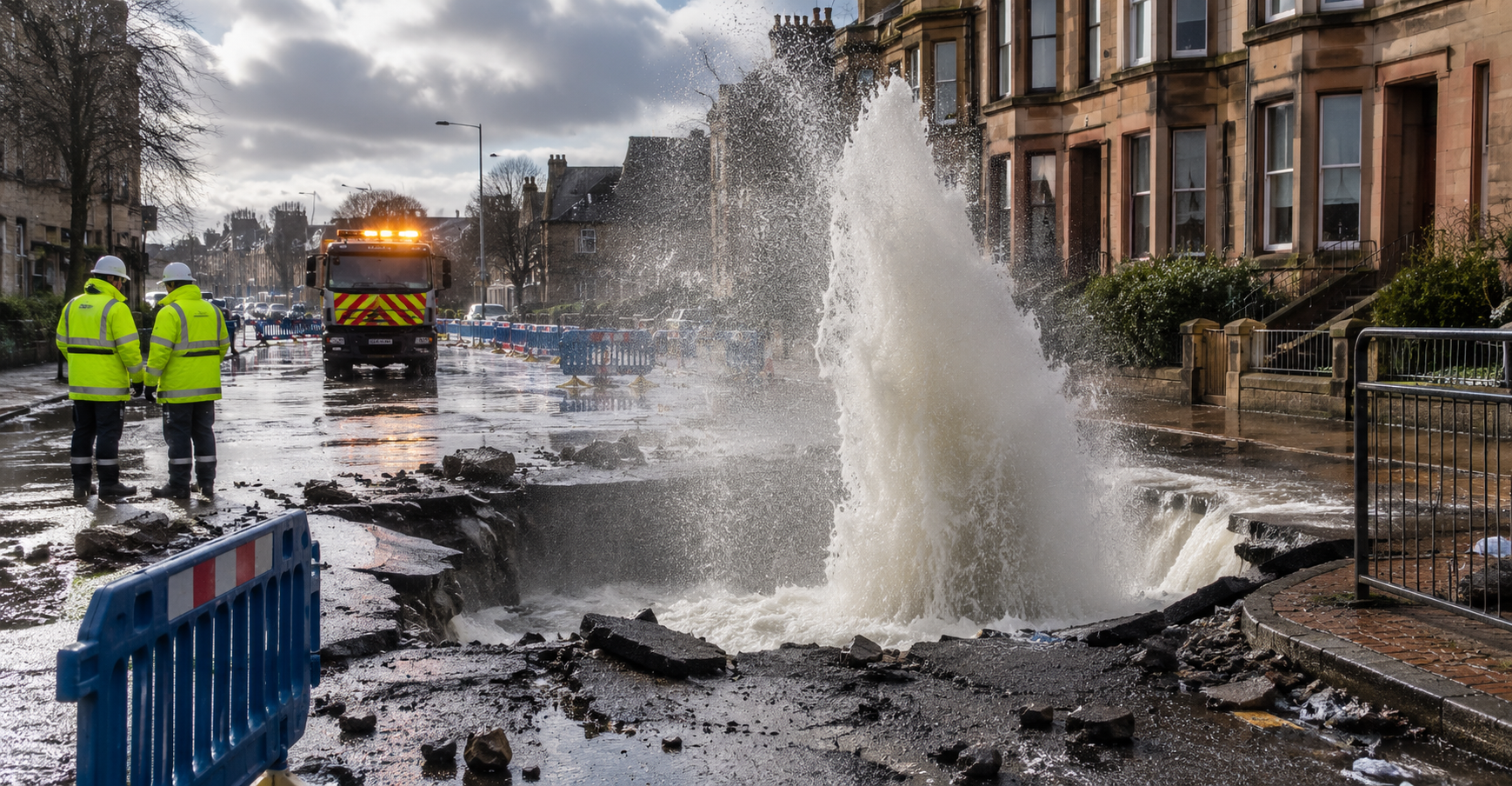
Glasgow Water Main Break Shettleston Road What Happened and Who Was Affected
The Glasgow water main break on Shettleston Road caused worry for residents, businesses, commuters, and road users across part of the city’s East End. When a water main bursts on a busy road, the problem can spread fast. It is not only about water on the street. Homes can lose supply, taps can run with low pressure, roads can close, buses can be diverted, and shops may struggle to stay open.
In this case, Scottish Water said engineers were responding to a burst water main on Shettleston Road that was causing loss of water supply in Glasgow G32. A later visible update from Scottish Water also mentioned planned work in Shettleston G32 on a burst water main, with a road closure and traffic management in place.
For people living nearby, the main questions were simple: what happened, who was affected, why was the road closed, and what should residents do if the water supply changes?
What Happened on Shettleston Road?
A water main break happens when an underground pipe carrying pressurised water cracks, bursts, or fails. Once that happens, water can escape quickly and push its way through the road surface, drains, pavements, or nearby low points.
On Shettleston Road, the incident was linked to a burst main affecting the G32 postcode area. That meant some residents could experience a complete loss of water supply, while others might notice low water pressure, cloudy water, or discoloured water.
The visible problem on the road can look dramatic, especially if water spreads across the carriageway. But the hidden problem underground is usually more serious. Crews need to find the damaged section, isolate it, dig down safely, repair or replace the pipe, then restore the road surface and water supply.
Who Was Affected?
The people most likely to be affected were residents and businesses connected to the damaged part of the water network in Glasgow G32.
That could include homes in and around Shettleston, as well as nearby streets depending on how the network was isolated. Some households may have seen no water at all for a period of time. Others may have had weak flow, spluttering taps, or water that looked cloudy or brown after the repair work disturbed sediment in the pipes.
Local businesses were also at risk of disruption. Cafés, restaurants, shops, salons, and small service providers often depend on reliable water for cleaning, toilets, food preparation, handwashing, and daily trade. Even a short outage can make it difficult for these businesses to operate normally.
Drivers, bus passengers, pedestrians, and cyclists were affected too. When a burst main leads to flooding or repair work, road closures and traffic management are often needed to keep people safe.
Why Road Closures Were Needed
A road closure can be frustrating, but it is often unavoidable after a burst water main.
Water escaping under pressure can damage the road surface. It can loosen tarmac, weaken the ground under the carriageway, flood pavements, and create unsafe conditions for vehicles and pedestrians. Even if the surface looks passable, the ground below may not be stable.
Repair teams also need space to work. They may have to bring in digging equipment, barriers, traffic cones, pumps, and repair materials. If the pipe is under or close to a busy road, a closure gives engineers enough room to work safely and reduces the risk of accidents.
That is why traffic management is usually part of the response. It may include diversions, temporary signals, closed lanes, warning signs, and restricted pedestrian access near the repair area.

How Scottish Water Responded
For a water main incident like this, Scottish Water engineers usually follow a step-by-step response.
First, they identify the problem and make the area safe. Then they isolate the damaged section of pipe so water loss can be controlled. After that, crews excavate the road or pavement to reach the broken main.
Once the damaged pipe is exposed, the team can repair or replace the affected section. After repairs, the network may need to be flushed and checked before normal supply returns fully.
This is why water can sometimes return in stages. Some homes may get supply back before others. Pressure can take time to stabilise. Water may also look discoloured for a while after the system is disturbed.
What Residents May Have Noticed
During and after the Shettleston Road water main break, residents may have noticed several common supply problems.
These can include:
Loss of water supply
Low water pressure
Cloudy water
Brown or discoloured water
Spluttering taps
Air in the system
Slow flow from cold taps
Discoloured water can happen after a burst because pressure changes disturb natural sediment inside the pipes. It does not always mean there is a serious safety issue, but residents should follow official advice and avoid using water that looks unusual until it clears or until Scottish Water gives guidance.
A common first step after supply returns is to run the cold kitchen tap gently until the water clears. If the problem continues, residents should report it.
What To Do If Your Water Supply Is Affected
If your water supply is affected by a burst main, the first thing to do is check official updates. Scottish Water’s Latest In Your Area page lets customers enter a postcode to track supply issues, see local updates, sign up for alerts, and report a problem.
Practical steps for residents include:
Keep bottled water available if supply is interrupted.
Avoid using washing machines or dishwashers until supply is stable.
Run cold taps gently if water returns cloudy or discoloured.
Do not use hot taps first, as this can draw discoloured water into your hot water system.
Check official updates before assuming the issue is fixed.
Report ongoing loss of supply, pressure problems, or water quality concerns.
Avoid affected roads while repair crews are working.
If you are caring for elderly relatives, young children, or someone with medical needs, check on them during a supply outage. Even a short disruption can be harder for vulnerable residents.
How Businesses Can Be Affected
For local businesses, a water main break can create problems beyond inconvenience.
A restaurant may not be able to prepare food safely. A café may struggle to make drinks, wash dishes, or keep toilets open. A salon may have to cancel appointments. A shop may lose customers if the road outside is closed or footfall drops.
Businesses may also face delivery delays if roads are blocked or if traffic is diverted through surrounding streets. Staff may arrive late, customers may avoid the area, and some services may need to pause until water supply returns.
For small businesses on or near Shettleston Road, the disruption can be especially frustrating because they often operate with limited room for lost trading hours.
Traffic and Travel Disruption
Shettleston Road is an important local route in the East End of Glasgow, so any closure can affect more than one street.
Drivers may need to use alternative routes. Bus services can face delays or diversions. Pedestrians may need to avoid flooded pavements or fenced-off repair areas. During peak travel times, even a short closure can create congestion nearby.
Anyone travelling through Shettleston, Tollcross, Carmyle, or nearby parts of Glasgow G32 during repair work should allow extra time and check travel updates before leaving.
Why Water Mains Burst
A burst water main can happen for several reasons. In older cities like Glasgow, some pipes have been underground for many years. Over time, they can weaken due to age, corrosion, pressure changes, traffic vibration, ground movement, heavy rain, or nearby construction.
Sometimes the exact cause is not obvious right away. A pipe may fail after years of wear, then suddenly burst when pressure changes or the surrounding ground shifts.
This is why water infrastructure matters. Most people do not think about the pipes under the road until they stop working. But those pipes support homes, businesses, schools, healthcare services, and daily life across the city.
How Long Repairs Can Take
The repair time depends on the size of the main, where the break happened, how much damage was caused, and how difficult it is to reach the pipe.
Some repairs can be completed within hours. Others take longer if crews need to dig through a busy road, manage flooding, repair the carriageway, or test the network before restoring full supply.
Even after water returns, the road may not reopen immediately. Engineers may need to backfill the excavation, repair the surface, check safety, and remove traffic management in stages.
That means residents may see supply improve before road disruption fully ends.
Why Clear Updates Matter
During a local utility incident, people want direct information. They need to know whether their home is affected, whether water is safe to use, how long repairs may take, and which roads to avoid.
Official updates from Scottish Water are important because social media posts and local rumours can quickly become confusing. The best approach is to check the official service page, follow direct updates, and report problems if your property remains affected after others nearby have supply restored.
Good communication matters because a water outage affects normal routines. People need water for drinking, cooking, washing, cleaning, caring for children, and running businesses.
What This Incident Shows About Local Infrastructure
The Glasgow water main break on Shettleston Road shows how one damaged pipe can affect many parts of daily life at once.
It can interrupt household routines, close roads, delay buses, reduce business trade, and put pressure on repair teams. It also reminds people that underground infrastructure needs constant maintenance, investment, and emergency response planning.
Most of the time, water networks work quietly in the background. When something fails, the impact is immediate and visible.
Key Details Residents Should Remember
The incident involved a burst water main on Shettleston Road.
Scottish Water linked the issue to loss of supply in Glasgow G32.
Repair work required road closure and traffic management in Shettleston G32.
Residents may notice low pressure, no water, cloudy water, or discoloured water after a burst.
Businesses may be affected if they rely on water or if road access is blocked.
Drivers and bus passengers should check routes and allow extra travel time.
The safest place for live supply information is Scottish Water’s Latest In Your Area service.
Why the Shettleston Road Break Mattered
The Glasgow water main break on Shettleston Road was more than a local repair job. It affected homes, traffic, businesses, and daily routines in a busy part of the city.
For residents, the priority was getting water supply back safely. For road users, it was avoiding delays and closures. For businesses, it was trying to keep operating through disruption. For Scottish Water, it was about isolating the damaged pipe, completing repairs, and keeping customers updated.
Incidents like this are a reminder that reliable water supply depends on systems most people never see. When those systems fail, even briefly, the effect is felt across the whole community.