Collie and MacKenzie Statue: The Story Behind Scotland’s Mountain Memorial
Collie and MacKenzie Statue
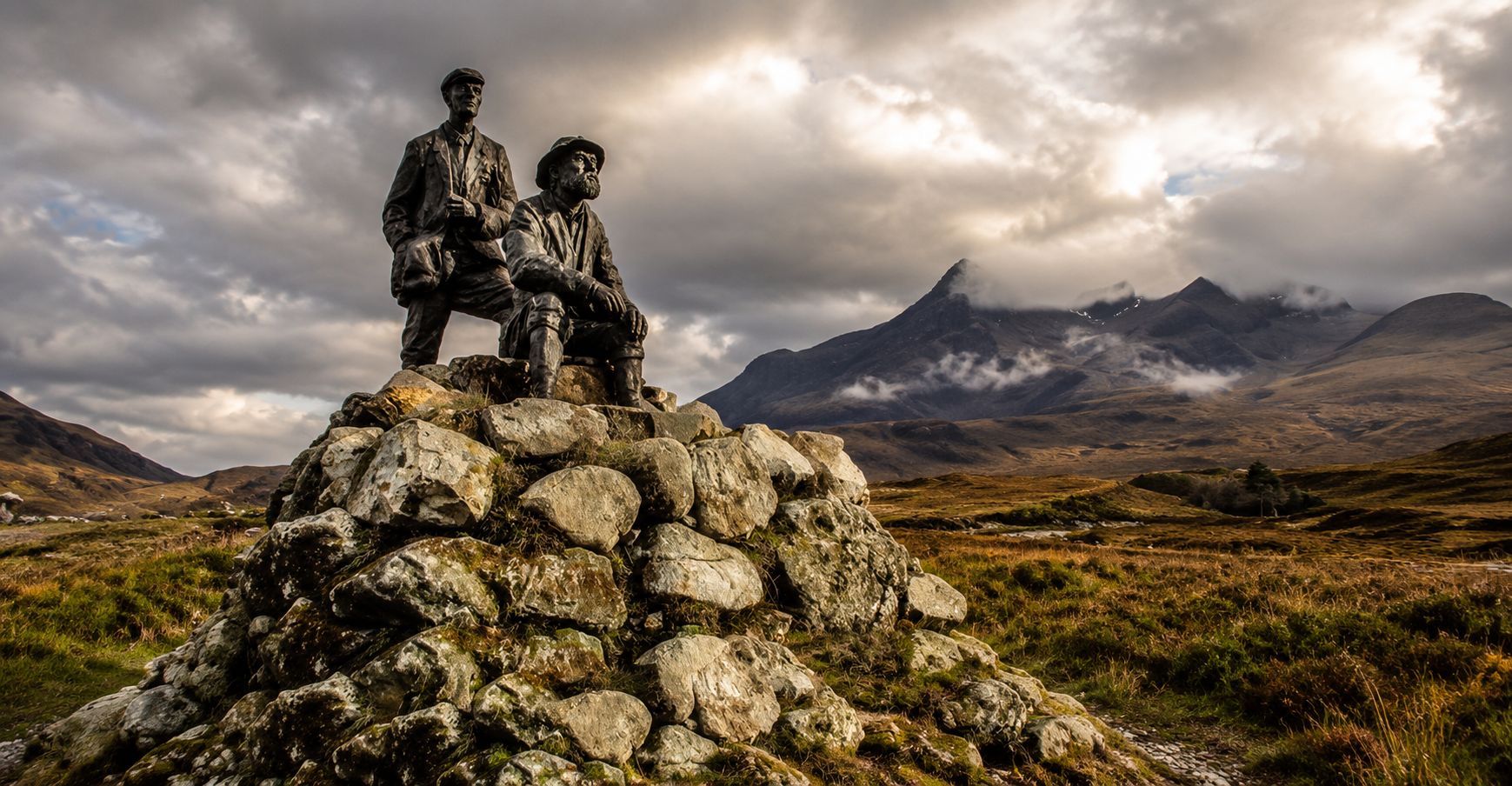
The Collie and MacKenzie Statue is one of the most meaningful mountain memorials in Scotland. It stands at Sligachan on the Isle of Skye, looking towards the dramatic Cuillin mountains, and honours two figures who helped shape the early story of Scottish mountaineering: Professor Norman Collie and John MacKenzie.
The bronze sculpture shows Professor Norman Collie, standing, and John MacKenzie, seated, on a rubble base. Art UK records the work as a bronze statue of Collie, who lived from 1859 to 1942, and MacKenzie, who lived from 1856 to 1933.
For visitors, the statue is more than a quick photo stop. It tells a story about friendship, class, landscape, climbing, Gaelic culture, and the way two very different men came together through their love of the Black Cuillin.
Where is the Collie and MacKenzie Statue?
The Collie and MacKenzie Statue is located at Sligachan, one of the best-known gateways to the Cuillin on the Isle of Skye. The sculpture was unveiled on 25 September 2020, and the sculptor was Steve Tinney, according to the UK statues database from the University of Sheffield’s Offbeat project.
Sligachan is a powerful setting for the memorial. It has long been associated with climbers, walkers, photographers, and travellers passing through Skye. From this area, the view towards the Cuillin feels wide, sharp, and unforgettable. That matters because Collie and MacKenzie were not only linked to the mountains in theory. Their lives and reputations were tied to the very ridges and peaks you can see from the statue.
The Collie and MacKenzie Heritage Group says Sligachan and the hotel hosted the unveiling in September 2020, with members of both families attending, although the gathering was limited because of Covid-19 restrictions.
Who was Norman Collie?
Professor Norman Collie, often known as J. Norman Collie, was an English scientist, chemist, explorer, and mountaineer. He became closely associated with Skye because of his pioneering climbs in the Cuillin Hills. Although he had a serious academic career, his name is remembered just as strongly in mountain history.
Collie first visited Skye in the late 19th century and became fascinated by the Cuillin. These were not gentle hills. The Black Cuillin are jagged, rocky, and demanding, with narrow ridges, steep drops, complex route-finding, and weather that can change quickly. For early mountaineers, they were a place of discovery and challenge.
Collie’s work in the Cuillin helped improve understanding of the range. He explored routes, climbed difficult lines, and contributed to the mapping and naming of features that became part of Skye’s climbing language. His name remains attached to places such as Sgùrr Thormaid, often known as Norman’s Peak, and Collie’s Ledge, one of the famous exposed routes connected with Sgùrr Mhic Choinnich.
Who was John MacKenzie?
John MacKenzie was a Gaelic-speaking crofter from Sconser on Skye and became one of the most important figures in early Scottish climbing. STV reported that MacKenzie began climbing in the Cuillin at around the age of ten and went on to become the first native Scot to work as a professional mountain guide.
That detail is important because MacKenzie’s story is rooted in local knowledge. He was not an outsider arriving to “discover” Skye. He was part of the island. He knew the land, the weather, the rock, the routes, and the rhythms of the place.
As a guide, MacKenzie helped visitors and climbers understand the Cuillin safely and practically. But he was not simply a helper in someone else’s story. He was a skilled mountaineer in his own right, with deep experience and courage on some of Scotland’s most serious terrain.
The statue recognises that balance. It places MacKenzie beside Collie, not behind him. That is one of the reasons the memorial feels so meaningful.
The friendship behind the memorial
The story of the Collie and MacKenzie Statue is really the story of a friendship. Collie came to Skye as a scientist and mountaineer. MacKenzie was a local crofter and guide. Their backgrounds were different, but the mountains gave them common ground.
Together, they climbed, explored, and helped open up the Cuillin to serious mountaineering. Their partnership became one of the defining relationships in the history of Skye climbing. It crossed social boundaries that were not always easy to cross in that period.
That is why the statue is not just a tribute to technical achievement. It is also a tribute to trust. A climber and guide must rely on one another. In the Cuillin, where mist, loose rock, exposure, and route complexity can quickly become dangerous, that trust matters even more.
Why the Cuillin matters to their story
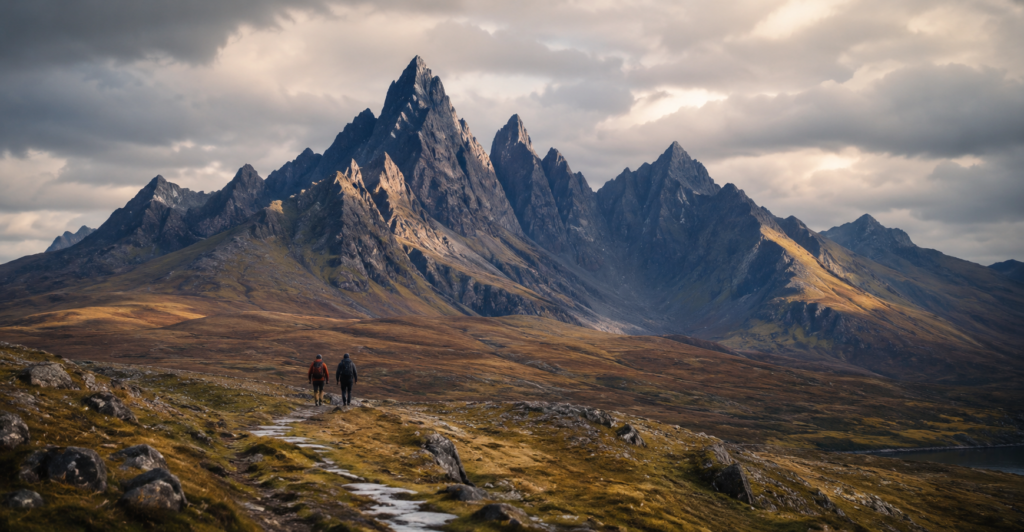
The Cuillin mountains are central to the memorial. Without the Cuillin, the statue would lose much of its meaning. These mountains are among the most dramatic landscapes in Scotland, especially the Black Cuillin, known for their dark, rough rock, sharp ridges, and serious scrambling and climbing routes.
For Collie and MacKenzie, the Cuillin were not just a scenic backdrop. They were the place where their partnership developed and where their reputations were made. They climbed difficult routes, studied the terrain, and helped make the range better known to the mountaineering world.
This is why the statue’s position at Sligachan works so well. It does not place the two men in a town square far from their world. It places them in sight of the mountains that shaped their lives.
How the statue came to be
The memorial was the result of years of effort by people who wanted to honour Collie and MacKenzie properly. STV reported in 2020 that a community heritage group had reached a £117,000 fundraising target for the bronze sculpture, which was planned for Sligachan against the backdrop of the Cuillin Hills.
This was not a quick project. The idea needed fundraising, planning, community support, artistic work, and patience. The finished statue became a public tribute not only to two men, but also to the people who believed their story deserved to be remembered in a permanent way.
The result is a memorial that feels grounded in the landscape. It does not overpower the view. It invites people to stop, look, and think about the human history behind the mountains.
The meaning of the sculpture
The statue’s design is simple but powerful. Collie stands while MacKenzie sits, and both figures are turned towards the mountains. This gives the sculpture a quiet, reflective feeling. They are not shown in a dramatic climbing pose. They are not placed on a summit with ropes and triumph. They are looking out, almost as if planning the next route or remembering climbs already made.
That choice makes the memorial feel human. It is about thought, companionship, and connection to place. The mountains are part of the artwork because the figures face them. The viewer is encouraged to look in the same direction.
For many visitors, that is the most memorable part of the experience. You do not just look at the statue. You look with it.
Why visitors stop at the Collie and MacKenzie Statue
Many people come across the statue while travelling through Sligachan, visiting the old bridge, walking nearby paths, heading towards the Cuillin, or driving across Skye. Some stop because they know the story. Others stop because the sculpture catches their eye.
For walkers and climbers, the statue has obvious meaning. It honours two men who helped shape the culture of mountaineering in Skye. For general visitors, it offers a way into the history of the landscape. You may arrive for the view, but the statue reminds you that these mountains have been walked, climbed, named, studied, feared, loved, and remembered by generations of people.
The location also makes it easy to connect the memorial with a wider Skye trip. Sligachan sits on routes used by visitors heading towards Portree, Broadford, Carbost, Glen Brittle, and other parts of the island.
A memorial to Scottish mountaineering
The Collie and MacKenzie Statue is often described as a mountain memorial, but it also belongs to the wider story of Scottish mountaineering. The early history of climbing in Scotland was not only about famous peaks. It was about guides, local knowledge, explorers, map-making, route-finding, and the slow building of a climbing culture.
MacKenzie’s role is especially important here. As a local guide, he represents the skill and knowledge of people who lived close to the mountains. Collie represents the scientific, exploratory, and mountaineering world that helped bring wider attention to the Cuillin.
Together, their story shows that mountain history is rarely made by one kind of person. It is made through partnerships, shared risk, and respect for the landscape.
Why John MacKenzie’s recognition matters
For many people, one of the most valuable things about the statue is the way it gives John MacKenzie proper public recognition. In older mountaineering stories, local guides were sometimes pushed into the background while visiting climbers received more attention.
The Collie and MacKenzie memorial avoids that. It names both men. It shows both men. It honours their partnership.
That matters because MacKenzie’s knowledge was essential. He knew the mountain routes not as abstract lines on a map, but as lived terrain. He understood the conditions, the rock, the weather, and the movement needed to travel safely through the Cuillin. His contribution was not secondary. It was central.
Why Norman Collie’s legacy still matters
Norman Collie’s legacy stretches beyond Skye, but the Cuillin remain one of the strongest parts of his story. He was a scientist and explorer, but he was also someone who returned again and again to the mountains that captured his imagination.
His connection with Skye became so deep that he is closely remembered there. The statue shows how strongly the island became part of his life and reputation. It also reminds visitors that mountaineering history often sits at the meeting point of science, exploration, friendship, and landscape.
Collie’s name remains part of climbing routes and mountain features, but the statue makes that history easier for everyday visitors to understand.
Visiting the statue at Sligachan
If you are visiting the Collie and MacKenzie Statue, it is worth taking a little time rather than treating it as a quick stop. The memorial is best appreciated with the Cuillin in view, especially when the weather gives clear sight of the ridges.
Sligachan is famous for changing light. One minute the mountains can be sharp and bright. The next, mist can roll across the tops and soften everything. That shifting atmosphere suits the statue because it reminds visitors how alive and unpredictable the landscape is.
Good footwear is sensible if you plan to walk around the area, especially after rain. Skye weather can be wet and windy even when the day starts calmly. If you are only visiting the statue and nearby viewpoints, it is still worth bringing a jacket and giving yourself enough time to enjoy the setting.
Common confusion about the statue
Some people search for the statue with unclear wording, such as “Collie and MacKenzie statue South Gyle” or similar phrases. The important point is that the actual Collie and MacKenzie Statue is not in South Gyle, Edinburgh. It is at Sligachan on the Isle of Skye.
That confusion may come from mixed search terms, travel planning, or people combining different Scottish place names. If you are looking for the mountain memorial to Norman Collie and John MacKenzie, the right location is Skye.
What makes this statue different from ordinary public art?
Many statues honour politicians, soldiers, writers, or national leaders. The Collie and MacKenzie Statue is different because it honours two men whose fame is tied to wild landscape and shared experience.
It does not sit in a formal civic square. It belongs to the open air. Its meaning comes from the view, the weather, the mountains, and the story of the people it represents.
That is why it feels more personal than many public monuments. It is not asking visitors to admire power. It is asking them to notice friendship, skill, courage, and love for the hills.
Why the statue matters to Skye
Skye is full of dramatic scenery, but the island’s story is not only visual. It is cultural, local, Gaelic, historical, and human. The Collie and MacKenzie Statue adds to that story by linking visitors to the people who helped make the Cuillin famous in mountaineering history.
For local heritage, the statue gives public form to a story that might otherwise be known mainly by climbers and historians. For visitors, it offers a deeper layer of meaning. You can look at the Cuillin and understand that these mountains were not only photographed and admired. They were explored, climbed, mapped, named, and loved.
Why the Collie and MacKenzie Statue is worth knowing
The Collie and MacKenzie Statue matters because it does what a good memorial should do. It brings the past into the present without over-explaining it. It gives visitors a reason to pause. It honours two lives without making the landscape feel small.
Norman Collie and John MacKenzie helped shape the story of climbing in the Cuillin. Their friendship crossed social lines, their mountain knowledge opened new routes, and their names remain tied to one of Scotland’s most powerful landscapes.
For anyone visiting Sligachan, the statue is worth more than a quick photograph. Stand beside it, look towards the mountains, and the meaning becomes clear. This is not just a bronze sculpture. It is a quiet tribute to two men, one island, and the mountains that brought them together.