Roger Billcliffe Gallery: A Simple Guide to Glasgow’s Scottish Art Gallery
Roger Billcliffe Gallery
Roger Billcliffe Gallery was one of Glasgow’s best-known private art galleries, closely associated with Scottish contemporary painting, 20th-century Scottish art, and a long tradition of carefully curated exhibitions. For decades, it was a place where collectors, artists, and casual visitors could see serious Scottish painting in a calm, city-centre setting.
The gallery was based in Glasgow and, in its later years, was listed at 185B Bath Street, Glasgow G2 4HU. Its public profile described it as a private gallery specialising in contemporary Scottish painting, with exhibitions changing monthly.
For anyone searching Roger Billcliffe Gallery, the interest is usually about more than an address. People want to know what the gallery was known for, which artists it represented, whether it was still open, why it mattered to Glasgow’s art scene, and what made it different from larger museums or commercial galleries.
Who is Roger Billcliffe?
Roger Billcliffe is a respected Glasgow gallerist, art dealer, author, and specialist in Scottish art. Before opening his own gallery, he had already built a strong reputation through his work with The Fine Art Society. Reports note that he became director of the Fine Art Society Gallery in 1979 before later opening the Roger Billcliffe Gallery in 1992.
That background is important because the gallery did not appear from nowhere. It grew out of years of experience, relationships with artists, knowledge of the Scottish art market, and an understanding of what collectors wanted to see.
Billcliffe’s name became closely tied to Glasgow art, Scottish painting, and the private-gallery world. His gallery was not simply a shop selling pictures. It was a place with a clear point of view: Scottish painting mattered, contemporary artists deserved serious attention, and collectors should be able to see both new work and strong 20th-century pieces in one setting.
The gallery’s Glasgow story
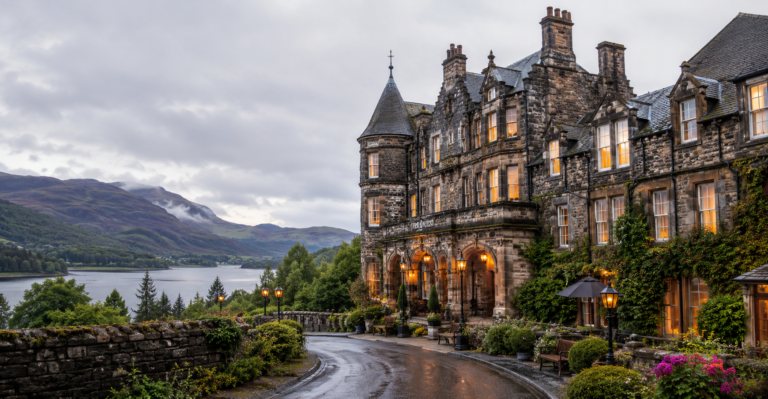
The Roger Billcliffe Gallery opened in 1992, taking over the premises formerly occupied by The Fine Art Society, where Roger Billcliffe had served as director. For many years, the gallery was associated with 134 Blythswood Street, a large early 19th-century building in Glasgow city centre. The Skinny described it as Scotland’s largest private gallery at that time, occupying five floors and specialising in Scottish contemporary and 20th-century painting.
Later, the gallery moved to a new space on Bath Street, close to Glasgow Art Club. What’s On Glasgow described the newer space as focusing on solo shows of contemporary artists and the best of 20th-century Scottish painting.
That move reflected a changing gallery landscape. Private galleries have had to adjust to shifts in footfall, online art sales, collector habits, and city-centre retail patterns. Even so, the Roger Billcliffe Gallery remained strongly connected to Glasgow’s cultural identity until its final chapter.
Is Roger Billcliffe Gallery still open?
The gallery announced that it would close permanently on 31 December 2025, following Roger Billcliffe’s retirement. Reports said the decision came after 46 years in the art business, including his years with The Fine Art Society and the Billcliffe Gallery in Glasgow and Edinburgh.
The closure was widely treated as a sad moment for Glasgow’s art scene. The gallery had been a familiar name for more than three decades under the Roger Billcliffe name, and even longer when Billcliffe’s Fine Art Society years are included. Artmag described it as a perennial fixture on the Scottish art scene and noted its farewell exhibitions before the end of 2025.
So, for readers searching today, Roger Billcliffe Gallery is best understood as both a former active gallery and an important legacy name in Scottish art.
What kind of art did Roger Billcliffe Gallery show?
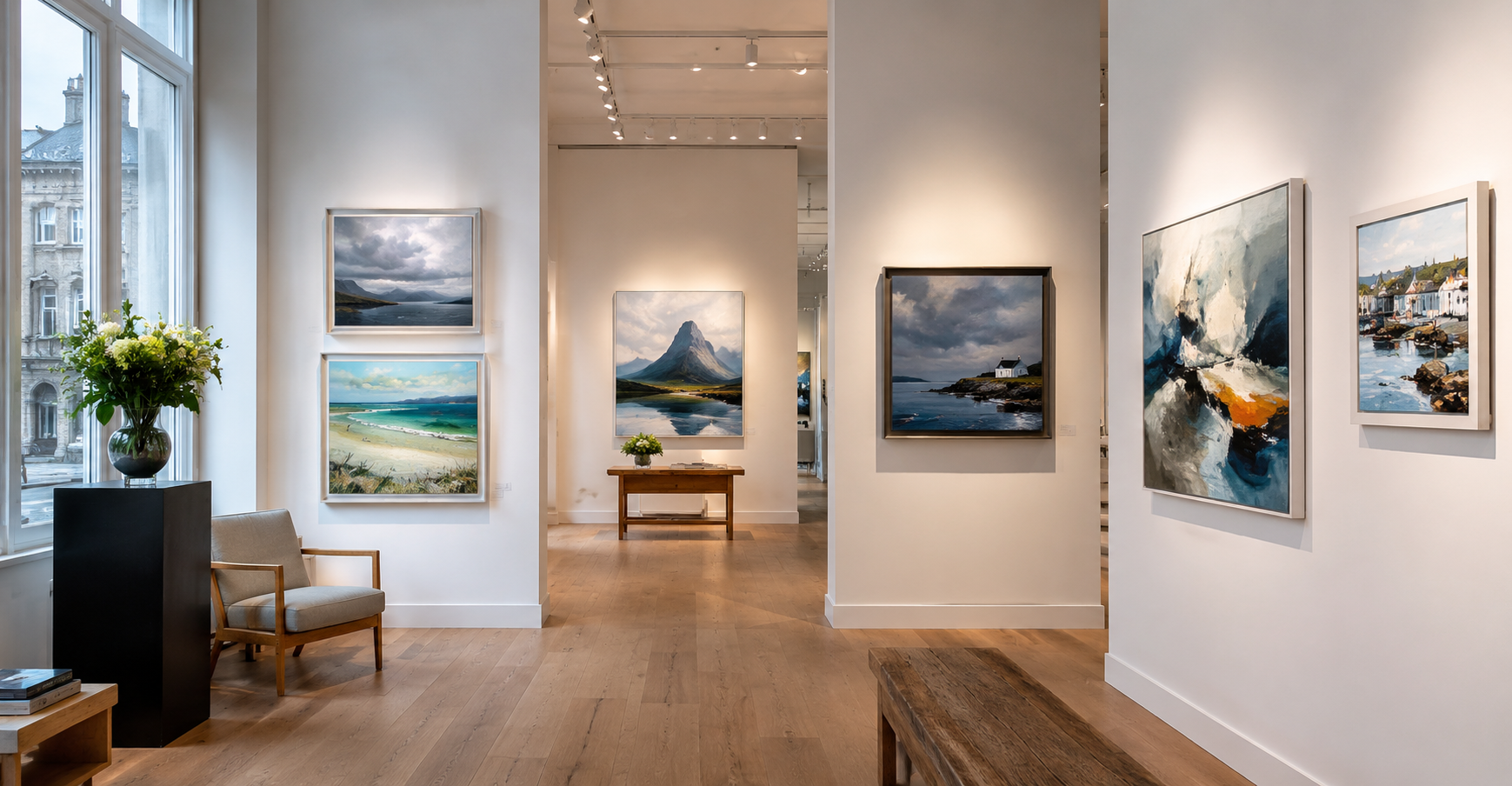
The gallery was best known for Scottish painting, especially contemporary and 20th-century work. Its profile across gallery listings consistently highlighted Scottish contemporary painting, 20th-century Scottish painting, and contemporary applied arts such as ceramics, jewellery, metalwork, silver, glass, and related craft objects.
This mix gave the gallery a strong identity. It was not a general-purpose gallery trying to show everything. Its heart was Scottish visual culture, especially painting. Visitors could expect landscapes, still lifes, figurative work, expressive painting, modern Scottish pieces, and exhibitions by living artists.
The gallery also had a collector-friendly feel. It was a place where people could look carefully, ask questions, compare artists, and build a deeper relationship with Scottish art over time.
Artists linked with the gallery
Over the years, Roger Billcliffe Gallery became associated with many important Scottish artists. Reports about the gallery’s closure mentioned names such as Duncan Shanks, Peter Howson, Gordon Mitchell, Christine McArthur, James D. Robertson, and Mary Armour.
Visitor reviews and listings also mention artists such as George Devlin, Alexander Goudie, and others whose work sat within the broader Scottish painting tradition.
That variety mattered. The gallery could show bold figurative work, quieter still life painting, landscape, expressive contemporary painting, and more traditional 20th-century Scottish work. This made it useful for both experienced collectors and people who were just starting to understand Scottish art.
Exhibitions and monthly shows
One of the gallery’s strengths was its exhibition rhythm. Public listings described the exhibitions as changing monthly, often focused on solo shows, with group exhibitions usually appearing during the summer months.
That regular change gave people a reason to return. A gallery with monthly exhibitions becomes part of a city’s cultural routine. Collectors check what is new. Artists watch who is being shown. Visitors drop in between other city-centre stops. Over time, that rhythm helps build trust.
MutualArt’s exhibition archive lists a long record of Roger Billcliffe Gallery shows, including late exhibitions such as Neil Macdonald, Three for Two: A Special “Postcard” Event, Farewell: A Celebration, and The Power of Still Life: Contemporary Still Life Painting in 2025.
Why the gallery mattered to collectors
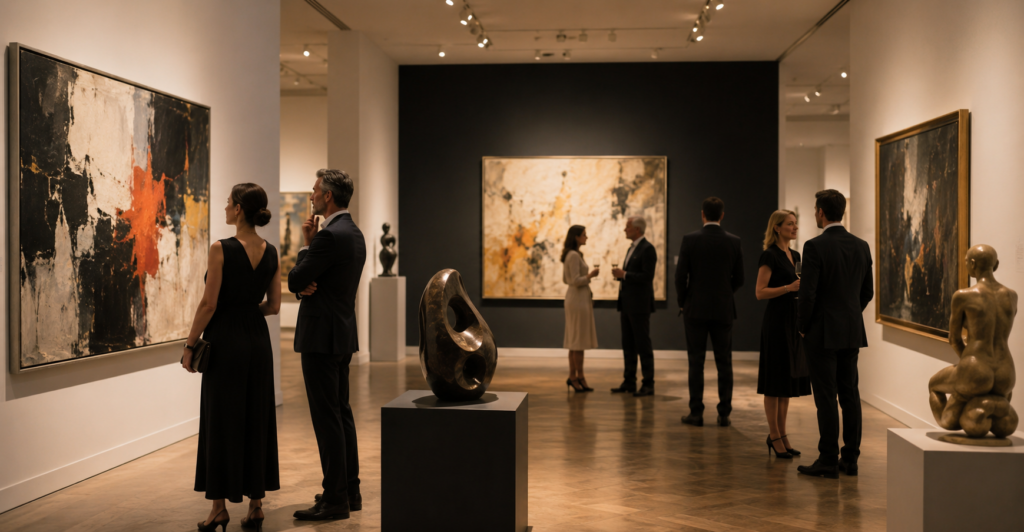
For collectors of Scottish art, Roger Billcliffe Gallery had a clear value. It offered a curated selection rather than a random mix. The gallery’s taste, history, and relationships with artists helped collectors feel they were buying with context.
Private galleries often play a role that is different from museums. Museums preserve and interpret art for the public. Commercial galleries help artists sell work, help collectors build collections, and keep a living art market active. Roger Billcliffe Gallery did that for Scottish painting over many years.
For someone looking to buy contemporary Scottish art, a gallery like this offered more than a wall of paintings. It offered knowledge: where the artist fitted in, how the work related to Scottish traditions, whether the piece belonged to a wider body of work, and why it might matter beyond decoration.
A quieter alternative to major museums
Glasgow has major art institutions, but private galleries give a different experience. Kelvingrove Art Gallery and Museum, The Hunterian, and Gallery of Modern Art are public institutions with broader collections and large visitor numbers. Roger Billcliffe Gallery offered something smaller, quieter, and more personal.
That kind of space can be easier for people who want to spend time with individual works. There is less pressure, fewer crowds, and often more opportunity to ask about the artist or the exhibition.
This is part of why the gallery became meaningful. It was not trying to compete with a museum. It filled a different role: intimate, specialist, commercial, knowledgeable, and rooted in Scottish art.
The Bath Street chapter
The gallery’s later address at 185B Bath Street placed it close to Glasgow Art Club, in an area with a strong cultural and architectural feel. What’s On Glasgow described the new space as adjacent to Glasgow Art Club and focused on contemporary solo shows and 20th-century Scottish painting.
Bath Street has long been part of Glasgow’s city-centre cultural geography, with clubs, galleries, restaurants, offices, and historic buildings nearby. For the gallery, this location kept it close to the city’s art community while offering a more compact space than its earlier five-floor Blythswood Street home.
The move also showed how galleries adapt. A smaller or newer space can change the visitor experience, but the identity of the gallery remained tied to the artists, the exhibitions, and Roger Billcliffe’s eye.
Why the closure mattered
The closure of Roger Billcliffe Gallery mattered because Glasgow lost more than a shopfront. It lost a long-standing art-world presence with memory, relationships, taste, and a strong link to Scottish painting.
Reports said Billcliffe cited several pressures behind the decision, including the effects of Covid-19, reduced city-centre footfall, changes in the art market, and the rise of online selling. He also noted that he was approaching 80 and felt it was the right time to stand down.
Those reasons say something bigger about the private gallery world. Even respected galleries can struggle when the way people buy art changes. Online sales may grow, but physical galleries depend on visitors walking in, seeing work in person, and building relationships over time.
Roger Billcliffe Gallery and Scottish contemporary painting
The phrase Scottish contemporary painting fits the gallery better than almost any other keyword. This was the area where it built much of its reputation. The gallery helped keep living Scottish painters visible, not only through sales but through regular exhibitions and long-term support.
Contemporary painting can sometimes feel overshadowed by digital art, installations, performance, or large public museum programming. A gallery like Roger Billcliffe’s kept painting at the centre. It treated painting as alive, serious, collectible, and worth returning to again and again.
That mattered for artists as well as collectors. Having a respected private gallery show your work can help build reputation, reach buyers, and place your practice within a wider Scottish tradition.
Applied arts and craft
Although painting was the gallery’s strongest identity, it also displayed contemporary applied arts. Listings mention ceramics, jewellery, metalwork, silver, glass, and gold.
This gave the gallery another layer. Visitors could see not only paintings for walls but also beautifully made objects. That mix is important because Scottish visual culture has never been only about painting. Craft, design, metalwork, glass, ceramics, and jewellery all form part of the wider art ecosystem.
For gift buyers, collectors, and people looking for smaller works, applied arts made the gallery more approachable. Not everyone walks into a gallery ready to buy a large painting. Some begin with a smaller object and slowly develop confidence as collectors.
What made Roger Billcliffe Gallery different?
The gallery’s difference came from focus, history, and taste. It was not a trendy pop-up space, and it was not a huge public institution. It sat somewhere else: a serious private gallery with a long commitment to Scottish artists.
Its monthly exhibitions, Scottish painting focus, and connection to both contemporary and 20th-century art made it a bridge between generations. A visitor could see living artists while also encountering the kind of older Scottish work that shaped today’s painting culture.
That balance is not easy. Too much emphasis on the past can make a gallery feel old-fashioned. Too much chasing of the new can make it feel unstable. Roger Billcliffe Gallery managed to hold both together for many years.
A helpful guide for people researching the gallery
If you are researching Roger Billcliffe Gallery today, it helps to search with a few related terms:
Roger Billcliffe Gallery Glasgow
Roger Billcliffe Gallery Bath Street
Roger Billcliffe Gallery exhibitions
Roger Billcliffe Scottish art
Roger Billcliffe Gallery artists
Roger Billcliffe Gallery closure
Scottish contemporary painting Glasgow
20th-century Scottish painting gallery
These searches can help you find past exhibitions, artist records, archived pages, gallery listings, and press coverage. Because the gallery has closed, some information may appear through archive sites, artist websites, event listings, auction platforms, and art magazines rather than only the gallery’s own pages.
The gallery’s place in Glasgow art history
Glasgow has a deep artistic identity, from the Glasgow Boys and Glasgow Girls to the city’s art schools, museums, artist-run spaces, private galleries, and contemporary art scene. Roger Billcliffe Gallery belonged to that wider story.
It helped give Scottish artists a commercial platform. It gave collectors a trusted place to buy. It gave visitors a way to encounter Scottish painting outside the museum setting. And it helped keep the tradition of serious city-centre gallery-going alive.
The closure of the gallery does not erase that history. If anything, it makes the legacy clearer. For more than three decades under its own name, and for longer through Billcliffe’s earlier Fine Art Society years, the gallery was part of how Glasgow looked at, talked about, and bought Scottish art.
Why Roger Billcliffe Gallery is still worth knowing
Roger Billcliffe Gallery is worth knowing because it represents a major chapter in Glasgow’s private-gallery culture. It stood for Scottish painting, serious exhibitions, collector relationships, and the belief that art is best understood when seen closely and talked about properly.
For artists, it was a respected platform. For collectors, it was a trusted source. For Glasgow, it was part of the city’s cultural fabric. For anyone interested in Scottish contemporary art, 20th-century Scottish painting, or the changing life of private galleries, its story remains important.
Even after its closure, the name still carries weight. Roger Billcliffe Gallery was not just a place where paintings were sold. It was a place where Scottish art was given time, space, and attention.